AuRA
Personas and Chat
AuRA Personality builds distinct conversational characters from a short bio and a handful of style traits, and AuRA Chat lets people talk with them on a local, private model.
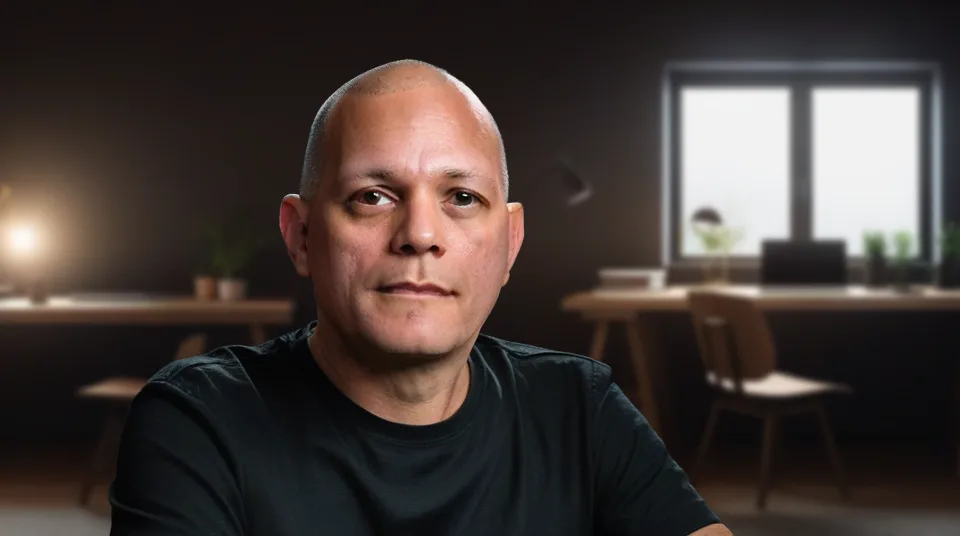
Research briefs need a voice, and so does anything people talk to. AuRA's persona work started as a way to give presenters and assistants consistent, distinct personalities, and grew into two companion tools: AuRA Personality, which builds the characters, and AuRA Chat, which lets people talk with them.
Personality as configuration
A persona in AuRA Personality is a small file: a name, a short bio, and a list of traits in six categories that describe how the character talks.
- Register, the overall manner: casual, professional, socratic, journalistic, deadpan, mentorly and about seventy more.
- Rhythm, the shape of the sentences: short and clipped, cumulative, waveform, breath-counted, call-and-response.
- Pattern, how a turn is organized: bottom line up front, chunk-and-check, example first, risk first, one question per turn.
- Lexicon, the words themselves, such as light analogy or light slang.
- Exposition, how ideas are introduced: zoom out then in, hook into what the listener already knows, story beats only.
- Tone, such as ironic, challenging or enthusiastic.
Each trait is a short key, and a shared library maps every key to a precise instruction. "Breath-counted" becomes "cap sentences to what fits one breath when read aloud"; "chunk-and-check" becomes "deliver one idea per short turn, then confirm understanding before moving on." The generator assembles the bio, a base prompt and the instructions for each trait, in a fixed order, into a single system prompt.
The result is that a new character takes a few lines to define and stays consistent, and two characters built from the same library sound genuinely different. One example persona is a cognitive-science graduate who speaks with warm clarity, draws analogies from indie films and music, and combines a casual, buddy-like register with breath-counted rhythm and a habit of checking in after each idea. The library ships with four such personas.
A persona can also be generated. Given a few optional attributes such as age, a generator agent writes a new character: a name, a background, interests and a way of speaking.
Steering the conversation
Alongside the persona sits a dispatcher we call conversation steering, a small, fast model call constrained to a strict JSON schema. For every user message it returns the tone it reads and the approach the reply needs, conversational or informational, and, when the user is asking for something, a cleaned-up search query. "Today's rough" comes back as frustrated and conversational. A question about what's showing at the local cinema comes back as curious and informational, with a query ready to send to search. The same dispatcher can read the persona's own reply before it goes out, so an avatar's facial expression can follow its tone.
AuRA Chat
AuRA Chat is the interface: a dark-themed web app where you pick a persona and talk. It's local-first and private by design. The model runs on your own GPU, nothing is sent to a remote service, and transcripts aren't saved.
- Persona configs set the personality, the system prompt, sampling settings and the model's prompt template, so a character can be tuned without code. Invalid configs are skipped with a message in the chat.
- Context management. When a conversation nears the model's context limit, the oldest half of the history is summarized by the same model, keeping facts, names, intentions and constraints and dropping the small talk, so long conversations keep their thread.
- Streaming replies with templated prompts built by hand for each model family.
- Models from a model hub, downloaded on first run, with optional speculative decoding through a smaller draft model for speed.
How it sounds
All of this ran locally on a mid-sized open-weight model, which was part of the point: a model small enough to host cheaply can hold a convincing, multi-turn conversation if the persona and the steering are right. One exchange from testing, with a persona who volunteers at a community garden:
You: Any parsley and sage?
Emma: Oh my gosh, yes! You're right. I should plant those too. Simon and Garfunkel were onto something there.
She had just mentioned planting rosemary and thyme, and she got the joke.
Related work
-
NewsPod AI
A news video podcast that researches, records and publishes itself.
-

AI Storybook
News stories, autonomously retold for children.
-

AuRA Avatar Generator
Customizable, photorealistic presenters for AI-generated video briefings.
-

b2c3d
Traditional 3D content creation, rebuilt with AI inside the tools.