AuRA
Evolution
How an experiment in undirected AI thought became VerdeThink, then the IntellectCascade framework behind NewsPod AI, then AuRA, and finally a clean-slate intelligence platform.

AuRA wasn't designed top-down. It grew in stages, and each stage kept what worked from the one before.
VerdeThink: something to think about
The project started with a question: what if an LLM didn't answer a question or run a chatbot, but just had something to think about? We gave a local model broad subject areas and let it write about what it was thinking, then keep going.
The first output was a stream of thinkpieces on ways to address social, cultural, environmental and geopolitical problems with new combinations of existing technology. The settings file held a list of technology stacks, a set of value statements to steer it, and follow-up guidance when the answers came back too thin. Then the model, unprompted, started citing the UN Sustainable Development Goals. I hadn't heard of them; once I checked, the citations were right. We refocused everything on the SDGs, since they covered what we'd been concentrating on, better organized.
We called that system VerdeThink. Under the hood it was already a dynamic prompt templating system with RAG, Tree-of-Thought and chain-of-thought analysis, hooks into inputs such as RSS feeds, web browsing and search, and outputs such as web pages, PDFs, speech and YouTube. It was good at the part people skip: it would write whole essays on who gets harmed when you fix a problem, and how to mitigate that. And it could do that all day, every day.
AI Podcaster: from output to production
The next idea came on a commute. Keeping up with AI and biotech news takes hours of reading, and most articles never go deeper than the press release: who is this person, what did this company do before, what does the paper actually say? The useful follow-up, if it comes at all, comes weeks later.
VerdeThink could already pick up an article, look up the people and companies involved, be critical about the reporting and go deep. So we pointed it at the news. That changed the job. A podcast can't just be output; it has to be produced. The AI Podcaster module added an AI-generated theme song, realistic speech, room tone on the voices, a music bed generated at creation time, segments, transitions, inserts, avatars from a library of generated faces, and an uploader. The show became NewsPod AI.
IntellectCascade: a framework
As the podcaster grew, VerdeThink's single-purpose code was reorganized into a general framework and renamed IntellectCascade. It became a set of modules: configuration, LLM access (local and hosted behind one abstraction), search, web extraction, RSS, speech, lip sync, image and video assembly, YouTube, resource syncing and scratch-space management, each with unit tests and generated documentation. Bark voices and a long-video SadTalker joined, then MuseTalk, then our PureSpeech fix for Bark drifting off script.
Recipes multiplied: AI news, AI Launchday, AI Stocks, biotech and medical experts, children's stories for AI Storybook, explain-like-I'm-five, science, finance and the original SDG analysis.
DeepResearch and DeepThink
The next stage made the research itself much deeper. DeepResearch went from a few bullet points to dozens of searches and hundreds of pages and PDFs per story, condensed into documents rather than lists of thin facts. A "socratic" feed type drove content through self-questioning, which became DeepThink. Runs started keeping everything they learned so each could publish a research document with its sources alongside the video.
AuRA: a research assistant anyone can run
Until then, configuring a run took an engineer. AuRA, the Autonomous Research Assistant, put it behind an interface: pick a source (a URL, an RSS feed, raw text or a local file), pick an audience recipe, set how deep DeepResearch and DeepThink should go, and run. The first recipes were medical, and the medical episodes got a glowing orb as their presenter. A notebook-style mode let people ask questions of a set of documents.
The tech deck from that stage sketched what came next: packaging for cloud deployment, and AuRA Chef, a building-block interface for composing recipes from ingredients such as "pull from an RSS feed", "generate a list", "pick items for deeper analysis", "define a problem space" and "publish the result".
AuRA v2: a clean slate
The original architecture was a monolithic Gradio application, and it couldn't support a real plugin model. So we rewrote AuRA from a clean slate as an intelligence platform. Recipes became YAML pipeline DAGs; every stage became a plugin; data sources gained both monitor and search modes; delivery fanned out to many channels at once; and a React operations center with a visual pipeline editor replaced the Gradio panels. AuRA Chef's idea of composing a pipeline from building blocks survives there, as drag and drop. The framing changed too, from content creation to intelligence briefs. See The Platform.
Gallery
Artwork from the VerdeThink and IntellectCascade era. 
The domains we pitched the framework at once AuRA had a name. 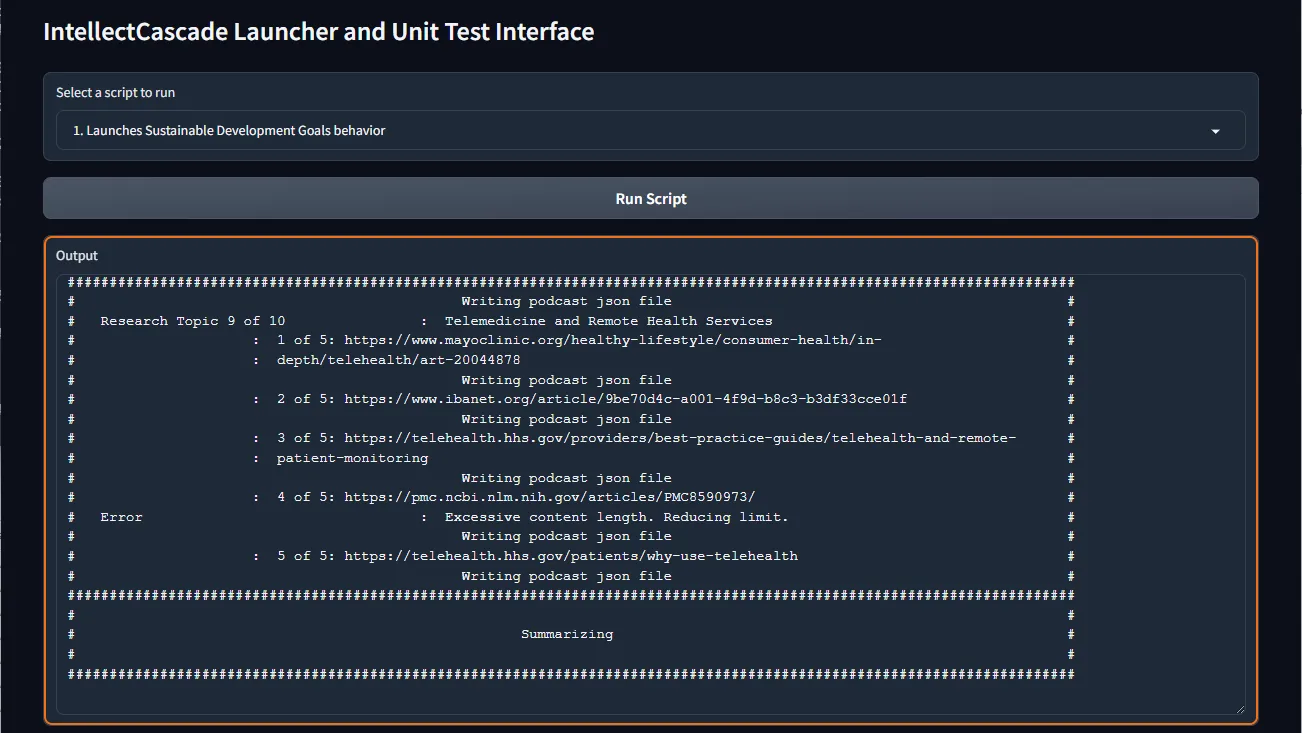
The IntellectCascade launcher, still offering the original SDG behavior as its first option. 
The first AuRA interface, which made recipes something anyone could run.
Related work
-
NewsPod AI
A news video podcast that researches, records and publishes itself.
-

AI Storybook
News stories, autonomously retold for children.
-

AuRA Avatar Generator
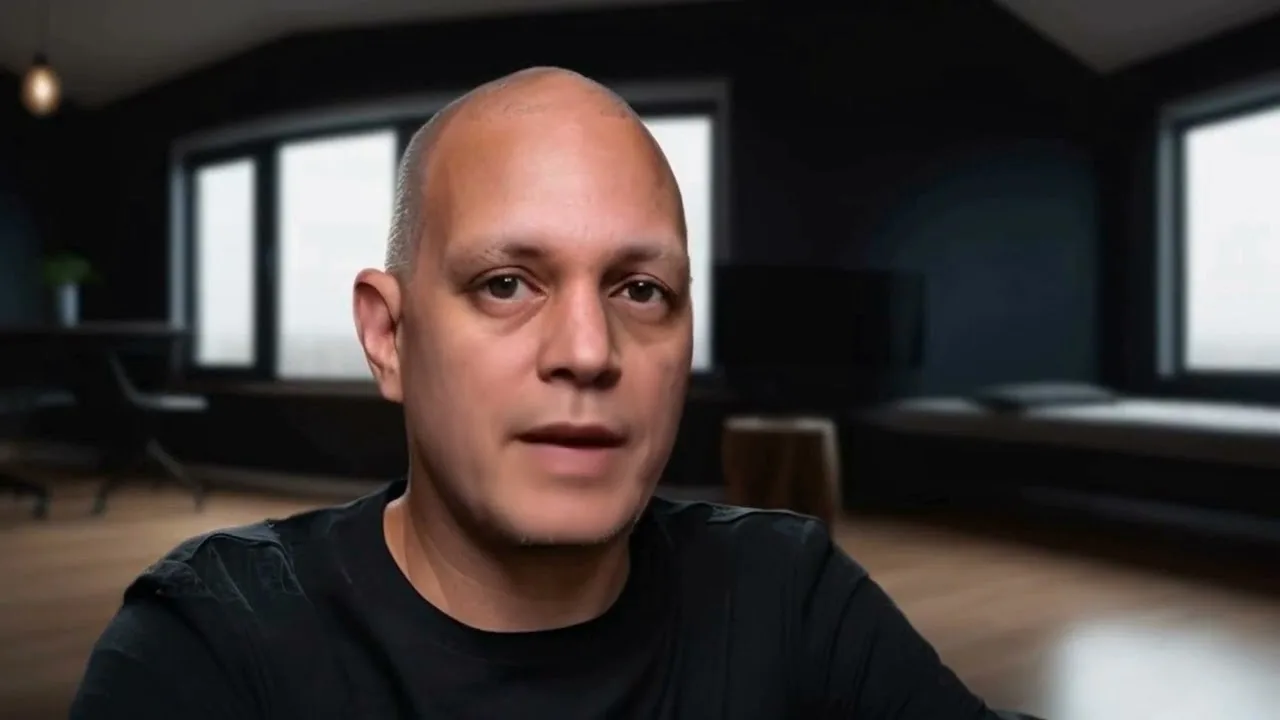
Customizable, photorealistic presenters for AI-generated video briefings.
-

b2c3d
Traditional 3D content creation, rebuilt with AI inside the tools.