AuRA
Our Autonomous Research Assistant: it keeps researching, analyzing and reporting between prompts.
 Eddie OffermannFounder and architect
- Role
- Founder and architect
- Areas
- AI, Research, Pipelines

Most AI waits to be asked something. We built AuRA to keep going: given broad guidelines instead of a task list, it keeps watching its sources, researching what it finds, connecting it and reporting on it, and it documents every source it used along the way.
Two agents
- DeepResearch works as a digital researcher. It decides what it needs to look up, runs the searches, reads the pages and PDFs it finds and condenses them into a sourced background, so AuRA builds knowledge instead of only retrieving facts.
- DeepThink evaluates what DeepResearch finds through rounds of self-prompting: it writes the questions it should answer, answers them one at a time, critiques its own ideas and looks for unintended consequences.
How those two fit together, step by step, is on How It Works.
How it began
In an early experiment with giving the system more autonomy, it started matching existing technologies to global problems and citing the UN Sustainable Development Goals by number. I hadn't come across the SDGs before and was skeptical, but the references held up: the system had lined its proposals up with specific goals without being told to. That result shaped the two-agent design.
AuRA was formerly called IntellectCascade, our framework for autonomous research and video production. Its first application as AuRA was medical research reporting: turning a large, fast-moving literature into briefings that clinicians and executives can act on. One study could become a plain-language video for a waiting room and a technical podcast for the physician, from the same research. The framework was eventually folded into AuRA and rebuilt from a clean slate. Evolution follows the whole path, from an essay-writing experiment through a self-publishing news show to a plugin-based intelligence platform.
What AuRA does
- Watches sources. An autonomous agent monitors RSS feeds, internet search results and other sources for material worth covering.
- Researches and writes. Local and remote LLMs write from what the agent finds, and search integration fills gaps in the sources.
- Prompts itself. A flexible prompt templating system lets the agent write its own prompts and adapt them to the content it retrieves.
- Reasons carefully. Retrieval-augmented generation (RAG) and Tree-of-Thought patterns support accuracy and more complex analysis.
- Speaks and appears on camera. Text-to-speech, including novel voices we trained on the Bark framework, and lip-synced presenter video.
- Publishes. Finished briefs and episodes go out automatically, to YouTube and other channels, with generated titles, descriptions and tags.
We built it for any largely autonomous research and media preparation: status briefings in corporate or government settings, educational materials, background whitepapers and news shows.
The platform
The rebuilt AuRA is an intelligence platform that runs configurable pipelines:
- Ingest from RSS, email, Kafka, webhooks, file drops, SharePoint or Confluence.
- Research with the same sources in search mode, plus web search and databases.
- Analyze with an LLM to pull out findings and themes.
- Format the result as a written, audio or video brief.
- Synthesize, process and deliver: text-to-speech, lip-synced newscast video, then fan-out to email, Slack, Teams, SharePoint, YouTube, a podcast feed, a phone call or any webhook.
Some design choices we'd make again:
- Everything is a plugin behind a stage-specific interface, so swapping a search backend, a voice engine or a lip-sync model is a configuration change.
- A data source is a concept, not a stage. The same source can monitor for new items or search for context. A filings source that watches for new filings can also look up filings about a company mentioned in a breaking story, and the same goes for PubMed, arXiv, CVE feeds and others.
- Pipelines are explicit YAML DAGs, with no auto-discovery, so every run is auditable.
- Local first. Inference runs in-process on local models by default, with hosted models as an option, and the same holds for speech.
The Platform covers the plugin architecture, the data sources and the visual pipeline editor in detail.
What it produces
AuRA has published sourced research reports, dozens of NewsPod AI episodes across several themed shows, medical research briefings with an orb for a presenter, and children's stories through AI Storybook. Outputs collects them, with episodes to watch.
Personalities and presenters
Companion projects give AuRA a face and a voice. Voices came from Bark, with our own correction pass to keep it on script, and presenters are lip-synced with SadTalker, then MuseTalk; Voices and Avatars shows how. AuRA Personality and AuRA Chat define personas as configuration and let people talk with them through a local, private chat interface, covered in Personas and Chat. The AuRA Avatar Generator produces the on-screen presenters.
Our long-form storytelling work in Aesopic came out of the same research into LLM-assisted long-form content.
Gallery

The first AuRA interface, running on IntellectCascade, producing a medical research episode from an RSS feed. 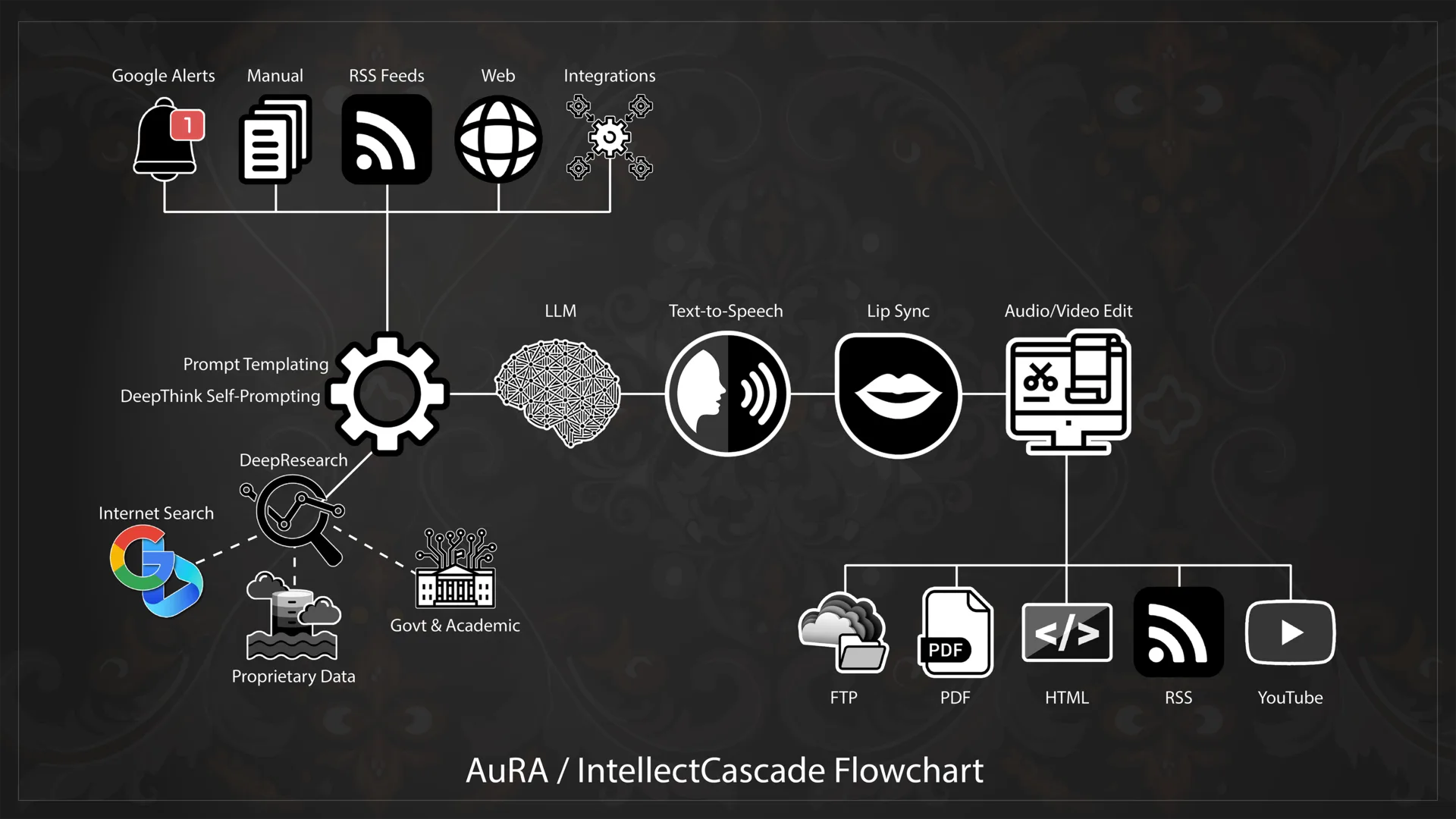
The AuRA pipeline from its IntellectCascade days. 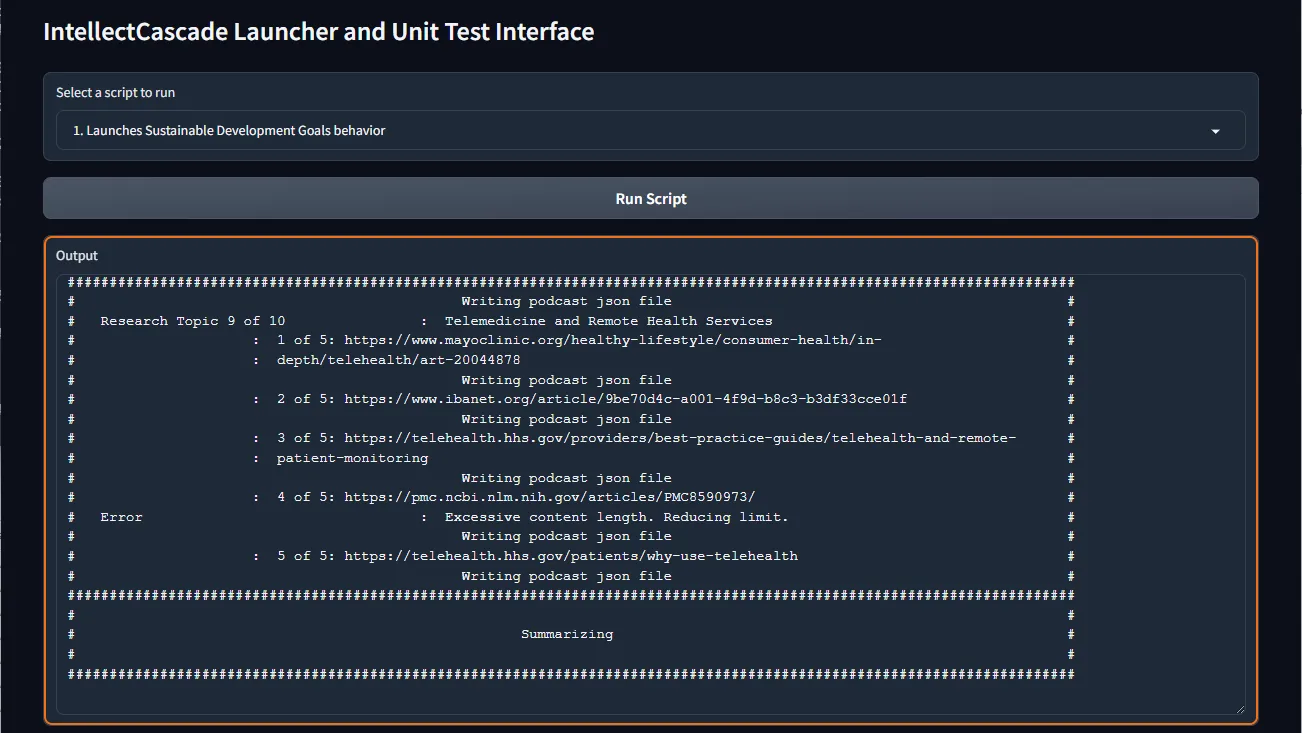
DeepResearch at work, reading five sources for one of ten research topics. A generated presenter clip, the raw material that lip sync turns into a newscast. 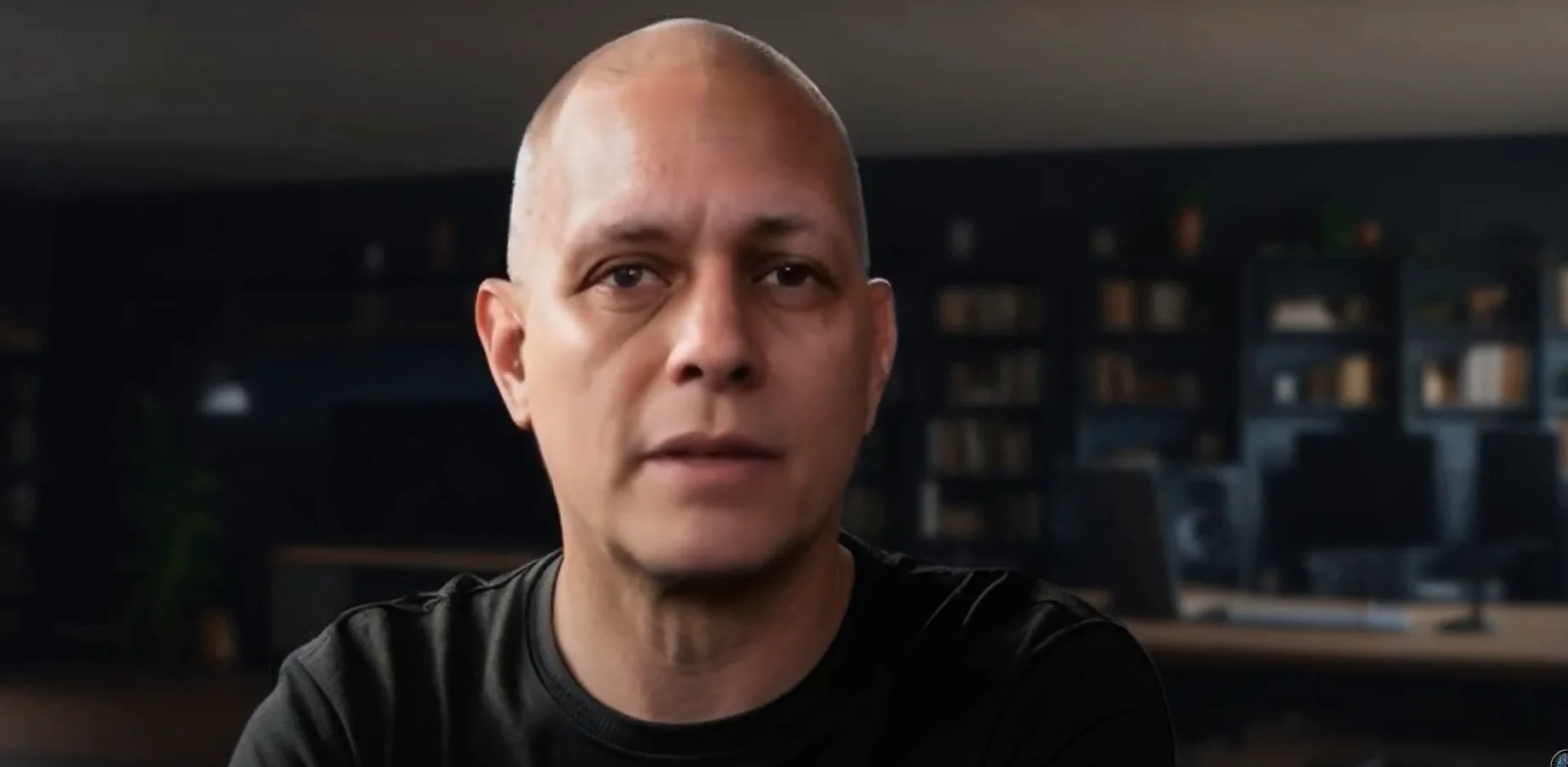
A presenter from the AI Stocks series. 
The orb presenter used for medical research episodes. 
Show art for the medical research series. 
Artwork from the AuRA press materials. 
Artwork from the AuRA launch, which focused on medical research reporting. 
Sources
- Big Blue Ceiling Unveils AuRA (press release)
- How AuRA Began
- Forget Prompt-Response AI: Meet the Autonomous Researcher (press release)
- Big Blue Ceiling Redefines Digital Media Production with IntellectCascade (press release)
- Transforming Medical Data into Actionable Knowledge
- AuRA in Healthcare (Medium)
- The Weaver and the Loom (Medium)
- Example research report: Bioprinting the Future
- AuRA Avatars (GitHub)
Related work
-
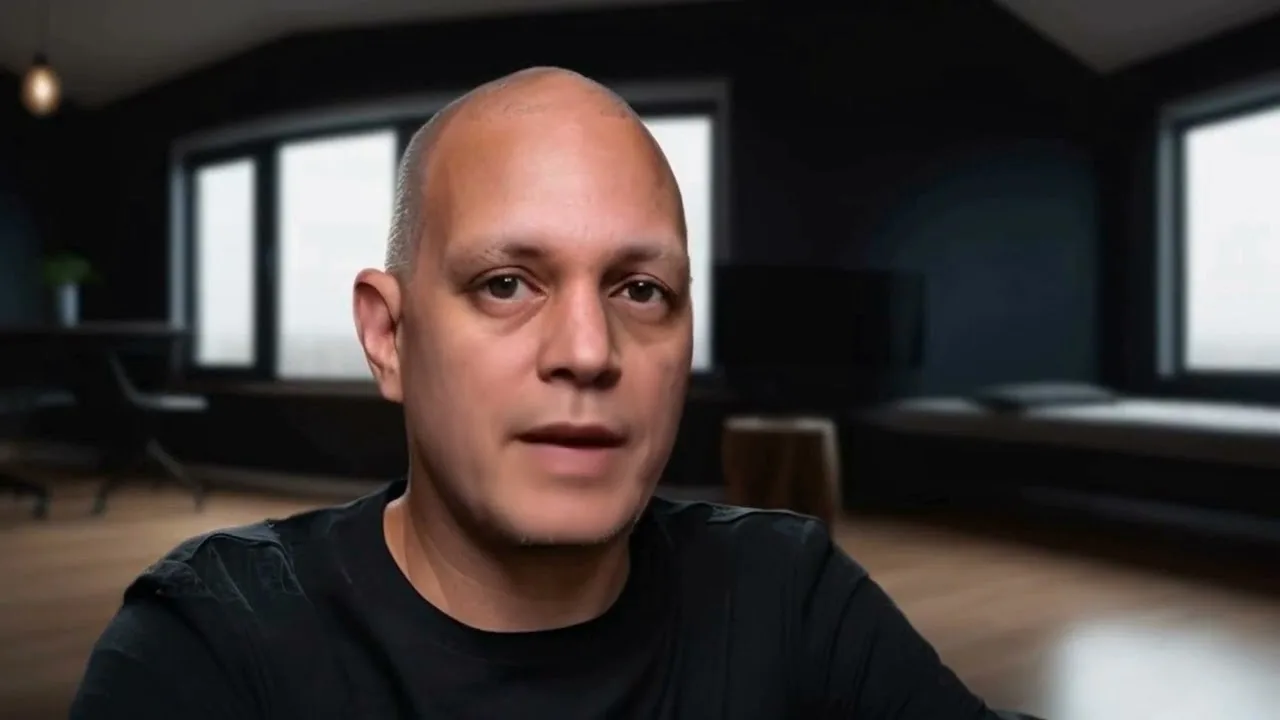
NewsPod AI
A news video podcast that researches, records and publishes itself.
-

AI Storybook
News stories, autonomously retold for children.
-

AuRA Avatar Generator
Customizable, photorealistic presenters for AI-generated video briefings.
-

b2c3d
Traditional 3D content creation, rebuilt with AI inside the tools.