Transparent Volumetric Display
A see-through, desktop-sized display that shows a remote person with realtime parallax.
 Eddie OffermannHardware specification, software architecture and engineering, demonstration
- Role
- Hardware specification, software architecture and engineering, demonstration
- Areas
- Telepresence, Hardware, Computer Vision, Research
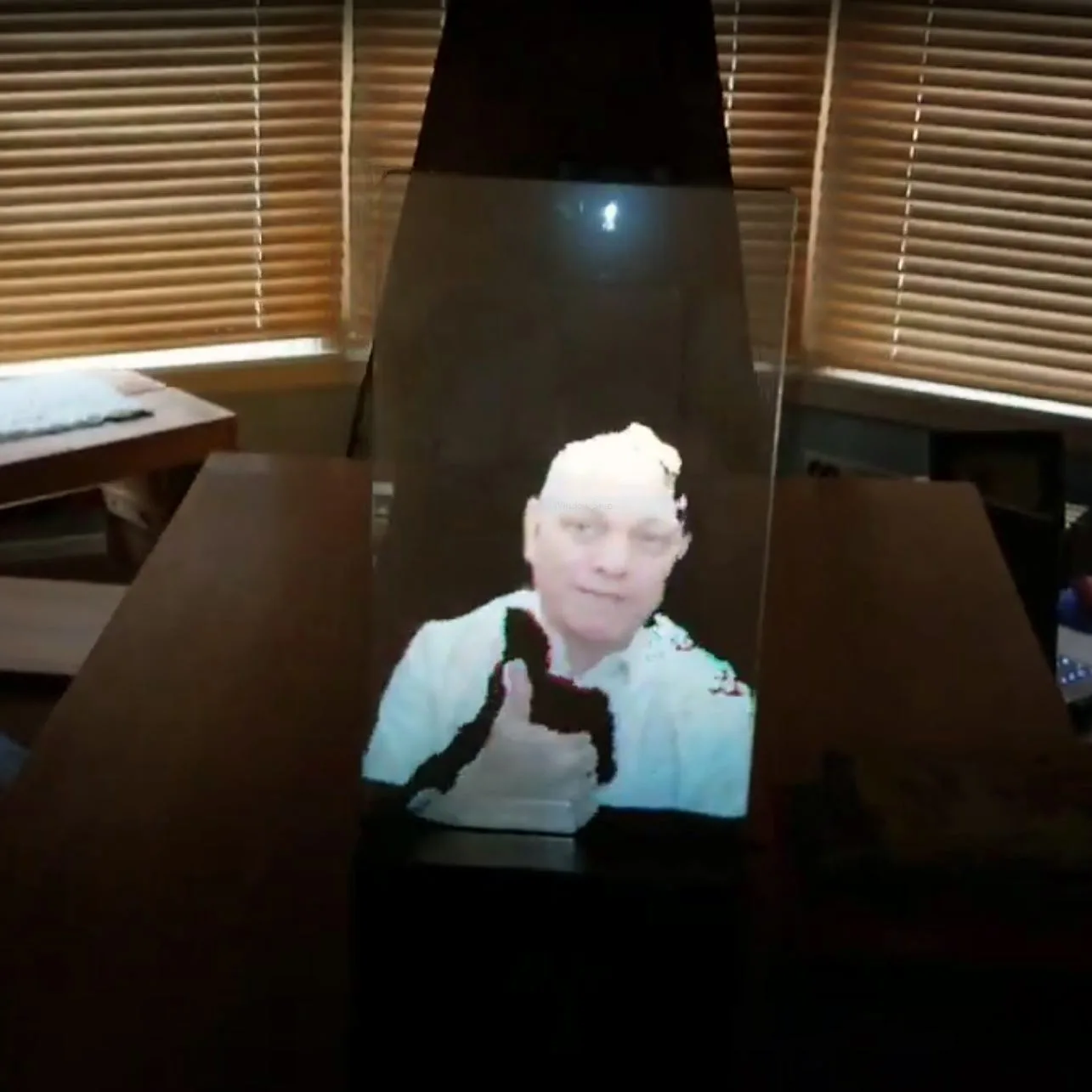
We ran a range of transparent display explorations, including commercially produced transparent panels. This one asked what a desktop-scale display in portrait orientation would feel like, a format nobody was selling, so we simulated the display with projection: a projector and an angled mirror throw the image into a tall pane of glass that stands in a slotted base.
We selected the materials, specified all of the hardware and directed assembly of the device. We also built the software stack, which collects volumetric data, streams it over an internet connection and rebuilds it on the far side. A small camera in the base tracks the viewer's face, and that drives the render perspective in realtime, so the parallax suggests a 3D person on a 2D screen.
The commercial panels let us test the same streams on wider, landscape screens, and learn what kind of content reads well when you can see the room through it.
Part of Enhanced Presence.
Gallery
The portrait prototype in a home setting, with the remote person rendered inside the glass. 
Design render: the glass, the top plate, the tracking camera and the base. 
The assembled display. 
The camera looks out through the front of the base to track the viewer. 
A small USB camera handles face tracking. 
A printed bracket angles a mirror over the projector lens. 
The projector and mirror that simulate the transparent panel. 
The volumetric capture before it's placed in the glass. A full-body volumetric stream on a commercially produced transparent panel. 
Testing a commercial transparent panel: rendered content and real objects share the same space. Content designed for a see-through screen.
Related work
-

Enhanced Presence
A run of prototypes chasing the feeling of being in the room with someone far away.
-
Glasses-Free 3D Telepresence
Volumetric calls on a 45-inch autostereoscopic display, no glasses required.
-
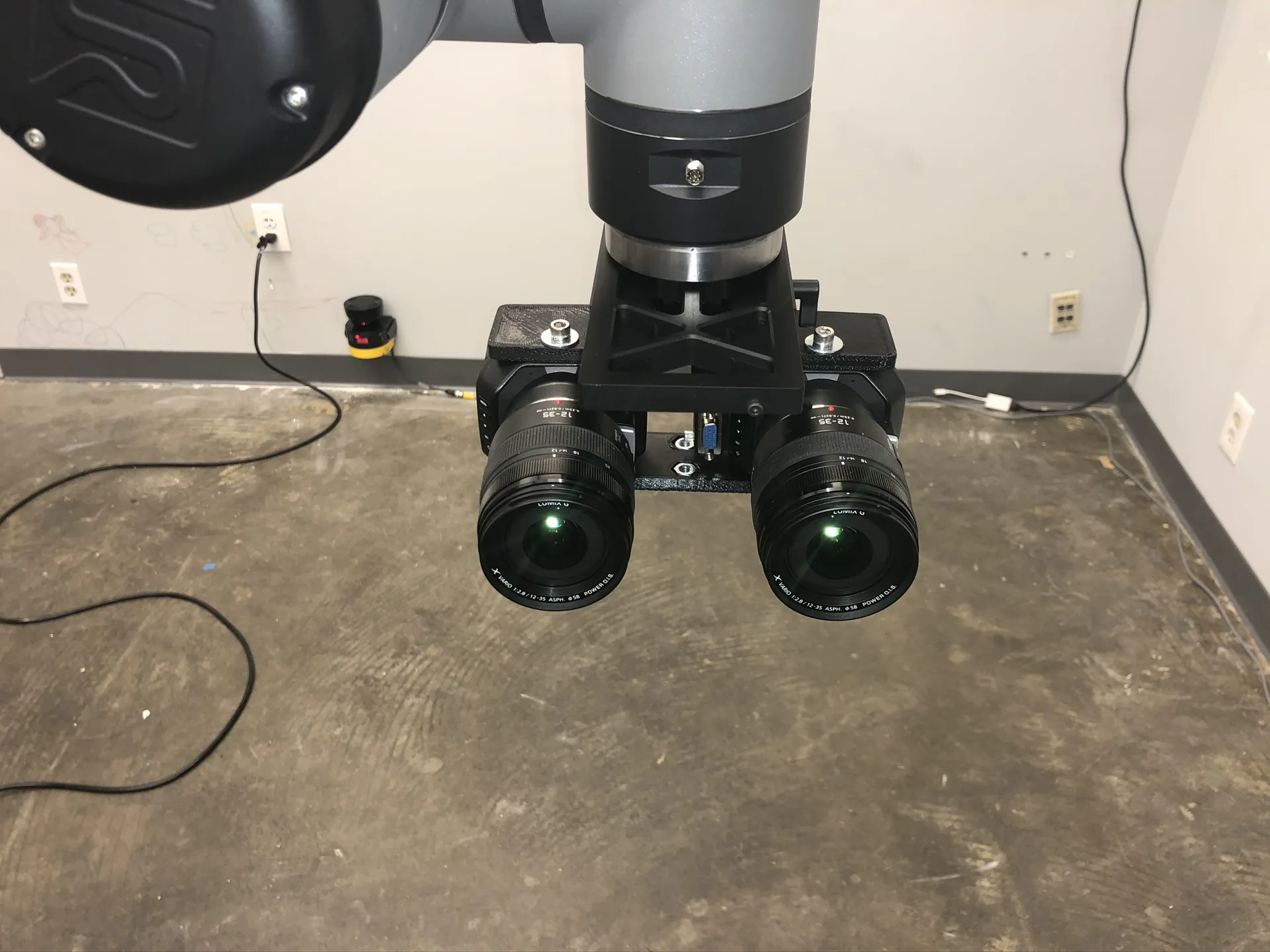
North Star Stereoscopic Telepresence
A preview of a fully 3D, ultra-HD video call with realtime perspective shift.
-

Projection AR Tabletop Gaming
Augmented reality projected onto an ordinary table, with touch.