HoloFlect
A modular, upgradeable AR headset platform built for enterprise.
 Eddie OffermannCo-developer
- Role
- Co-developer
- Areas
- XR, Hardware, Computer Vision, AI, Optics, Research

Most AR headsets are built like smartphones for your face: sealed, all-in-one devices that can't be upgraded, customized, expanded or maintained. That's tolerable for consumers and a real problem for enterprises, which have to run and repair a fleet of devices while the hardware changes underneath them every year.
HoloFlect took the opposite approach and treated the headset like a workstation.
Where it started
HoloFlect began as a simple, low-cost XR headset for education, independent developers and underserved communities. The first prototype was nothing more than a Samsung Galaxy S6 and a Leap Motion hand tracker in a printed frame. Everything after it kept that goal of hardware people can afford, build on and fix, and grew a professional tier on top.
The software plan was just as broad. AquariOS, also called HoloFlect OS, was a planned platform layer to unify AR and VR apps across mobile, standalone and tethered headsets, so the same apps could run on HoloFlect and on everyone else's devices.
The HoloFlect Evolution platform
- Fast, low-latency tracking and spatial understanding.
- Gesture, body pose, traditional computer vision and deep learning.
- Tiers for different budgets and uses, from fully self-contained to tethered to a PC, with stages in between.
- A workstation-class tier with modular construction: an upgradeable display, a choice of processor and a choice of spatial sensors.
Built to be taken apart
Every variant shares a standard structure, which made new configurations quick to build and made repair and upgrade easy. Components have standardized mating surfaces and attach magnetically wherever possible. Magnets recessed into the lens assembly hold it together without fiddly clasps, and in the finished parts they're invisibly encapsulated in the visor. Visor treatments range from mostly clear, for better eye contact, to heavily tinted, for vivid displays.
We called the architecture "Molecules". Elements such as the Compute Cluster, the Sensor Riser and the Optical Bracket combine into Compounds: a Laboratory build, a Gameplay build and a Tactical build all come from the same parts.
Mounts were developed for several depth and tracking sensors, including Intel RealSense and Stereolabs ZED cameras. For a lot of interaction, handheld controllers turned out to be better than gesture.
Generations
- Prototype: a phone-based headset with a Leap Motion for hand tracking, the first proof of the idea.
- HoloFlect Basic: a simpler, lower-cost design.
- HoloFlect Pro v1: PC-tethered, with a ZED sensor and a modular display.
- HoloFlect Pro v2: a tethered variant built around a printed halo frame. Later Pro builds added a compute-cluster CPU enclosure, a display cradle and a T265 mount.
- HoloFlect Tactical: a variant for field use that mounts on a tactical helmet with NVG and ARC rail mounts.
- Tablet: the same sensing and compute ideas in a handheld panel.
Later builds cut weight and bulk. The RealSense T265 became the base camera for configurations that need spatial understanding. The display moved to a 2560×1440 panel, for 1280×1440 per eye. A Qualcomm Snapdragon 820 board (Inforce 6640) was chosen as the base compute, leaving a path down to cheaper Snapdragon parts and up to the 5G-ready 855.
What the work exposed, more than anything, was what was missing underneath: depth sensing that scales past one room, sensors that talk to each other, and development platforms that go beyond simple visualizations. That led to our xR ecosystem research.
Explore HoloFlect
- Hardware Generations: every build from the phone prototype through Basic, four Pro designs, Tactical and the tablet, with photos and renders of each.
- Modular Design: the Molecules architecture, magnetic assembly, standardized mating surfaces, and how the parts went from CAD to print.
- Optics and Displays: the reflective visor and its calibration, display panels and driver boards, and our printed-lens experiments.
- Compute and Sensors: the configuration tiers, the Snapdragon-based Compute Cluster, the camera mounts, operating system compatibility and controllers.
- Tactical: the helmet-mounted build, from contour gauge and calipers to the studio shoot.
- Platform: AquariOS, the SDK behind The Blue Vale, and where the software thinking went next.
Gallery
HoloFlect Tactical, mounted on a tactical helmet. 
HoloFlect Tactical attaches to the helmet with NVG and ARC rail mounts. 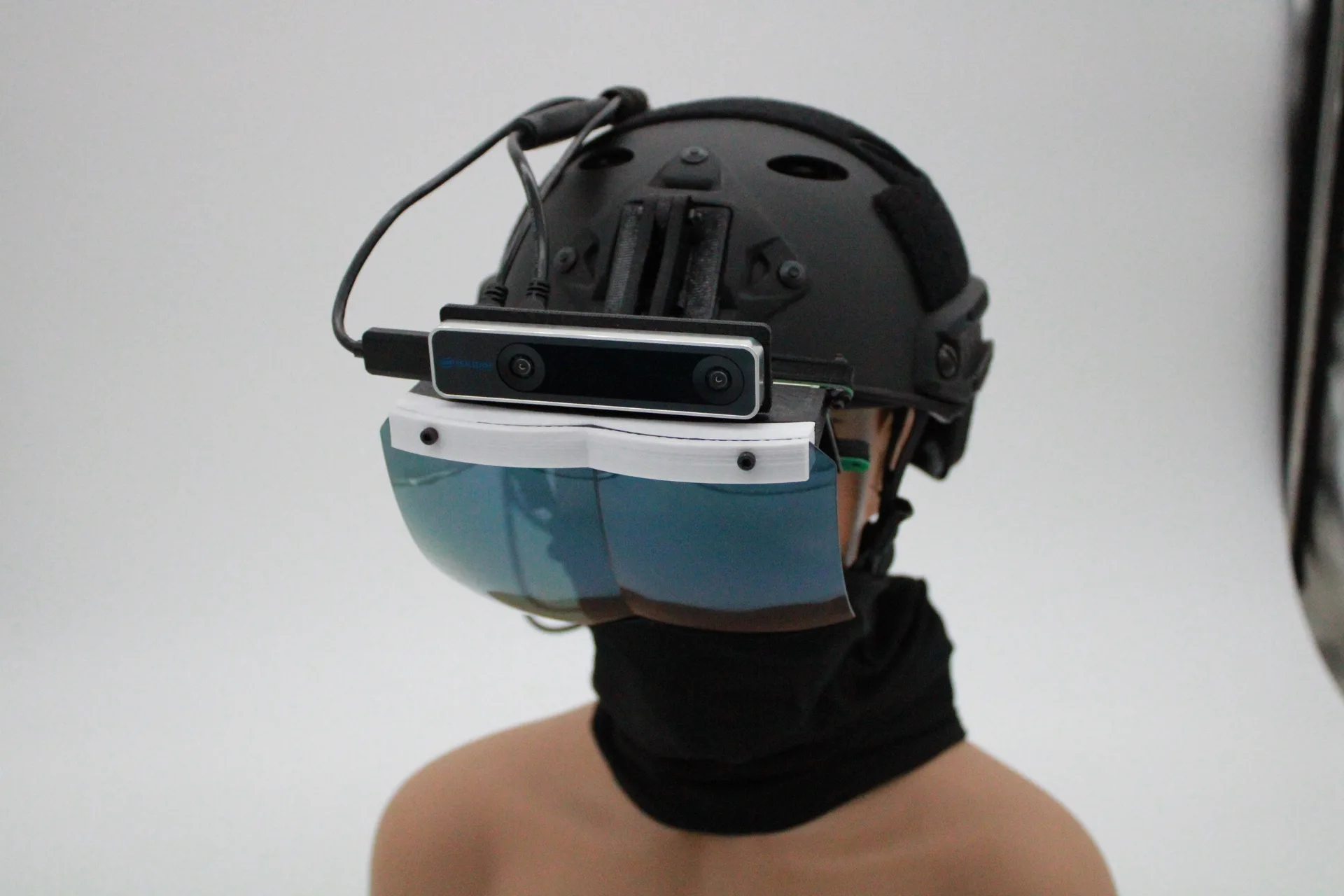
HoloFlect Tactical from the front. 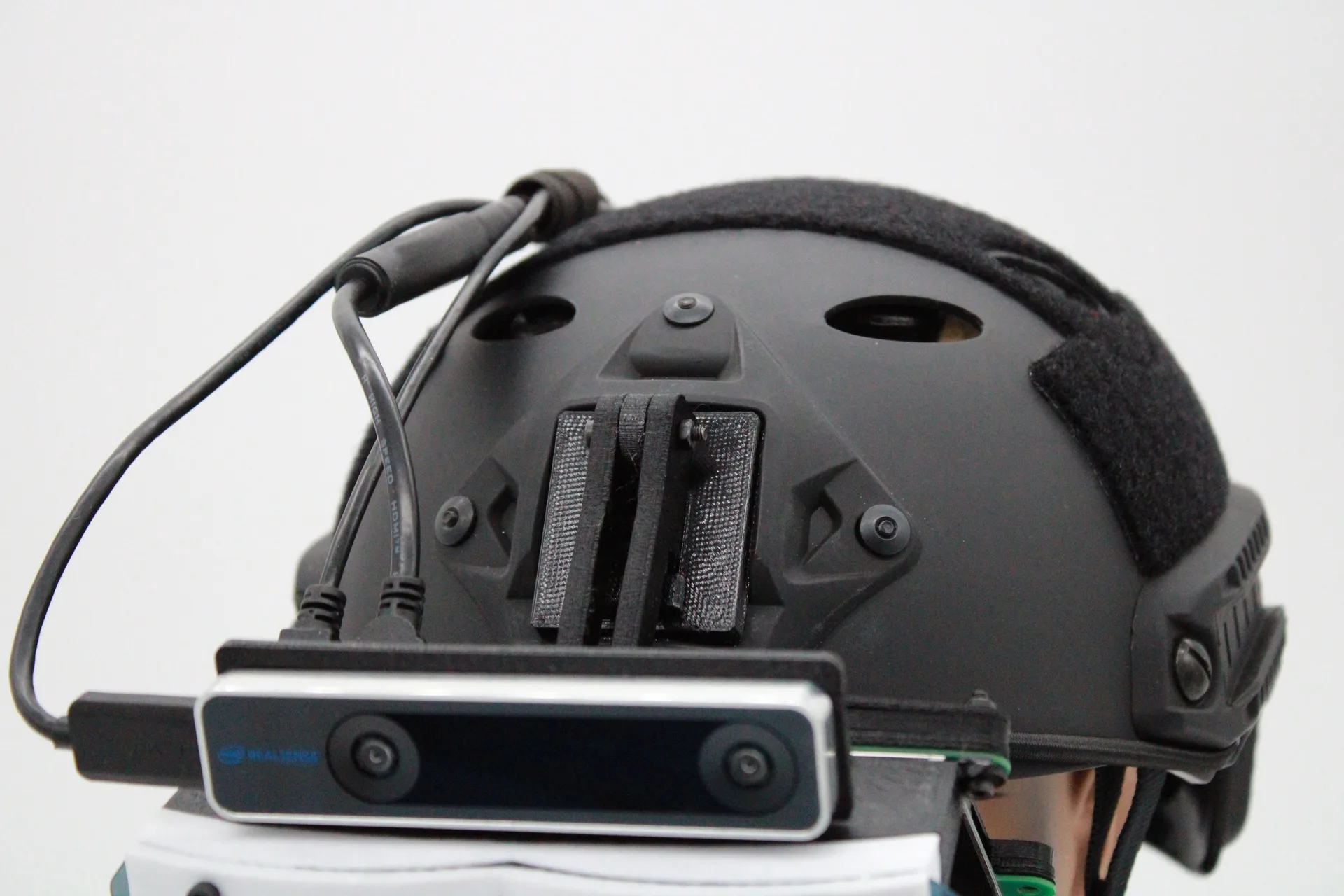
The helmet mount and the RealSense T265 tracking camera. 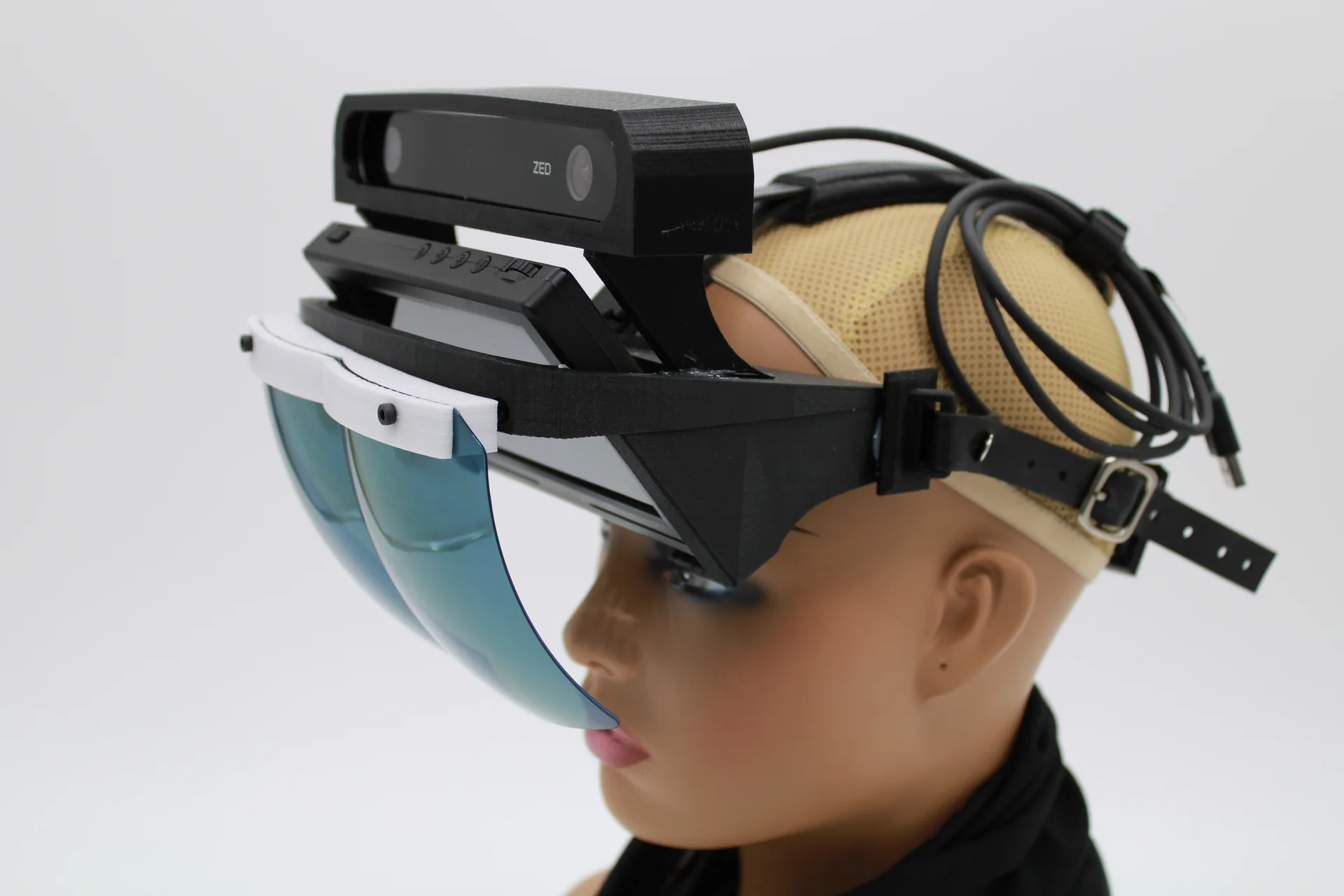
A Pro build with a Stereolabs ZED camera and a modular display. 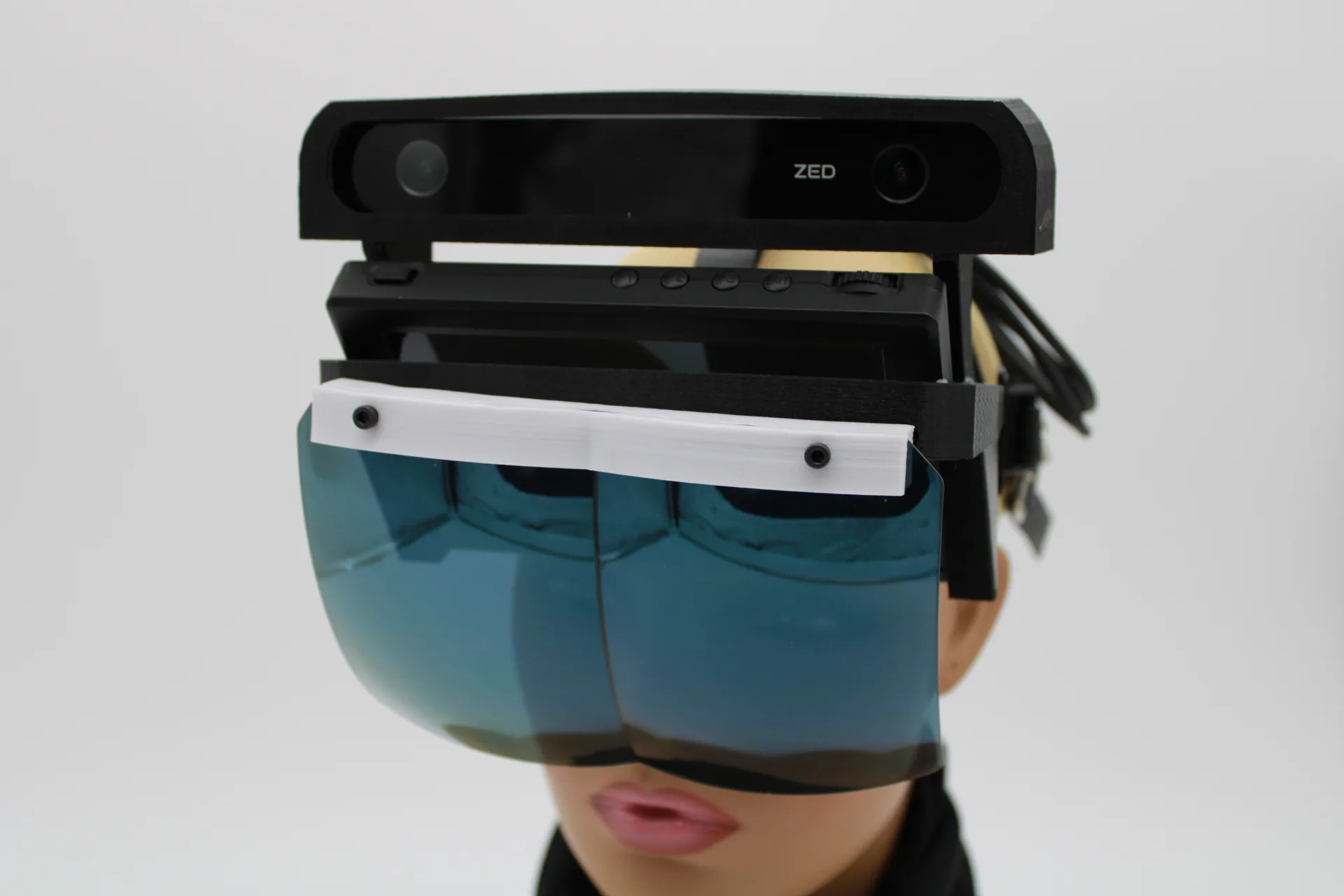
The Pro build from the front. 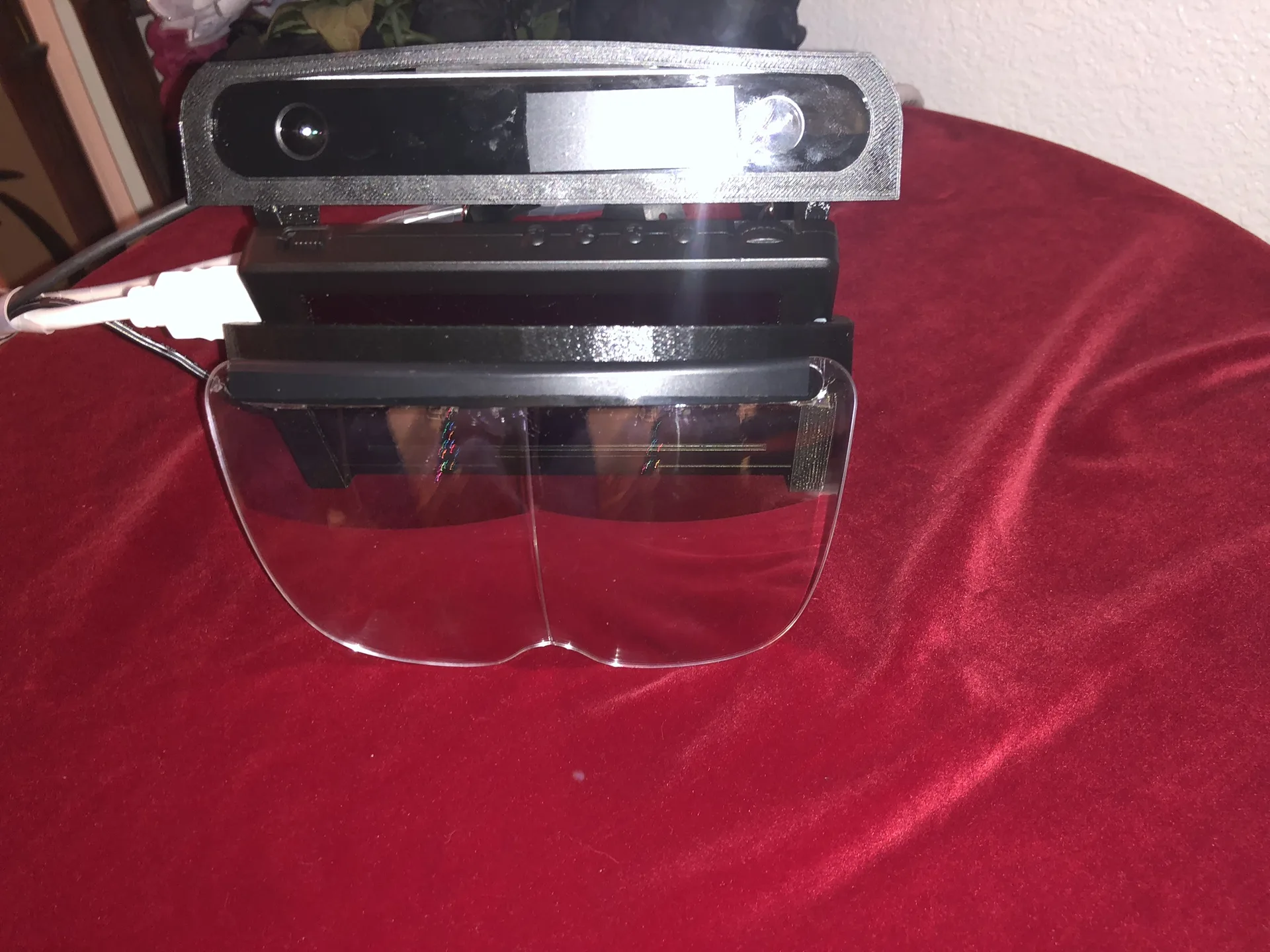
An early tethered Pro build. 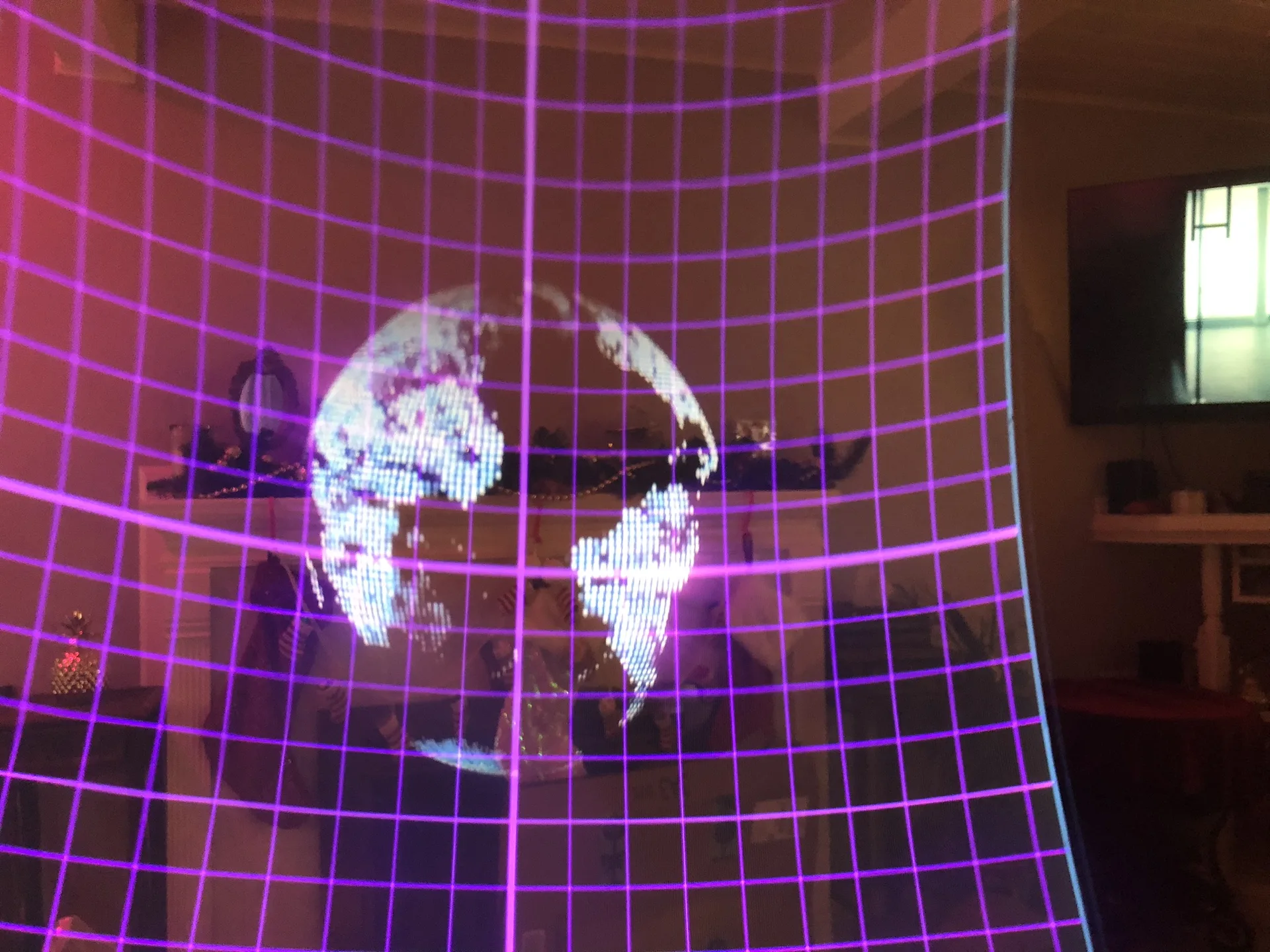
What the wearer sees: rendered content over the real room. 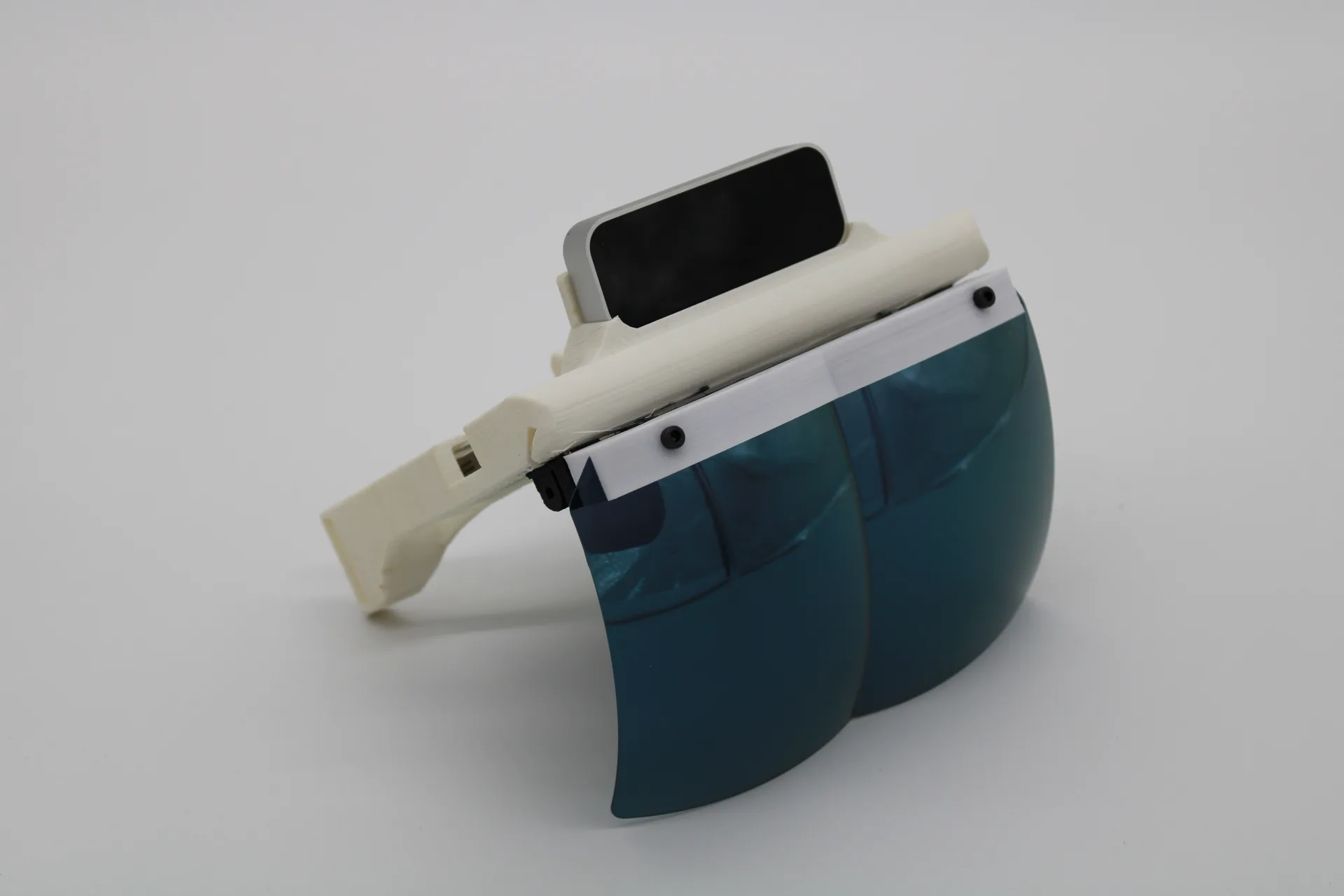
A first-generation build in white printed parts. 
The same frame with a depth sensor mounted on top. 
The printed halo frame of HoloFlect Pro v2. 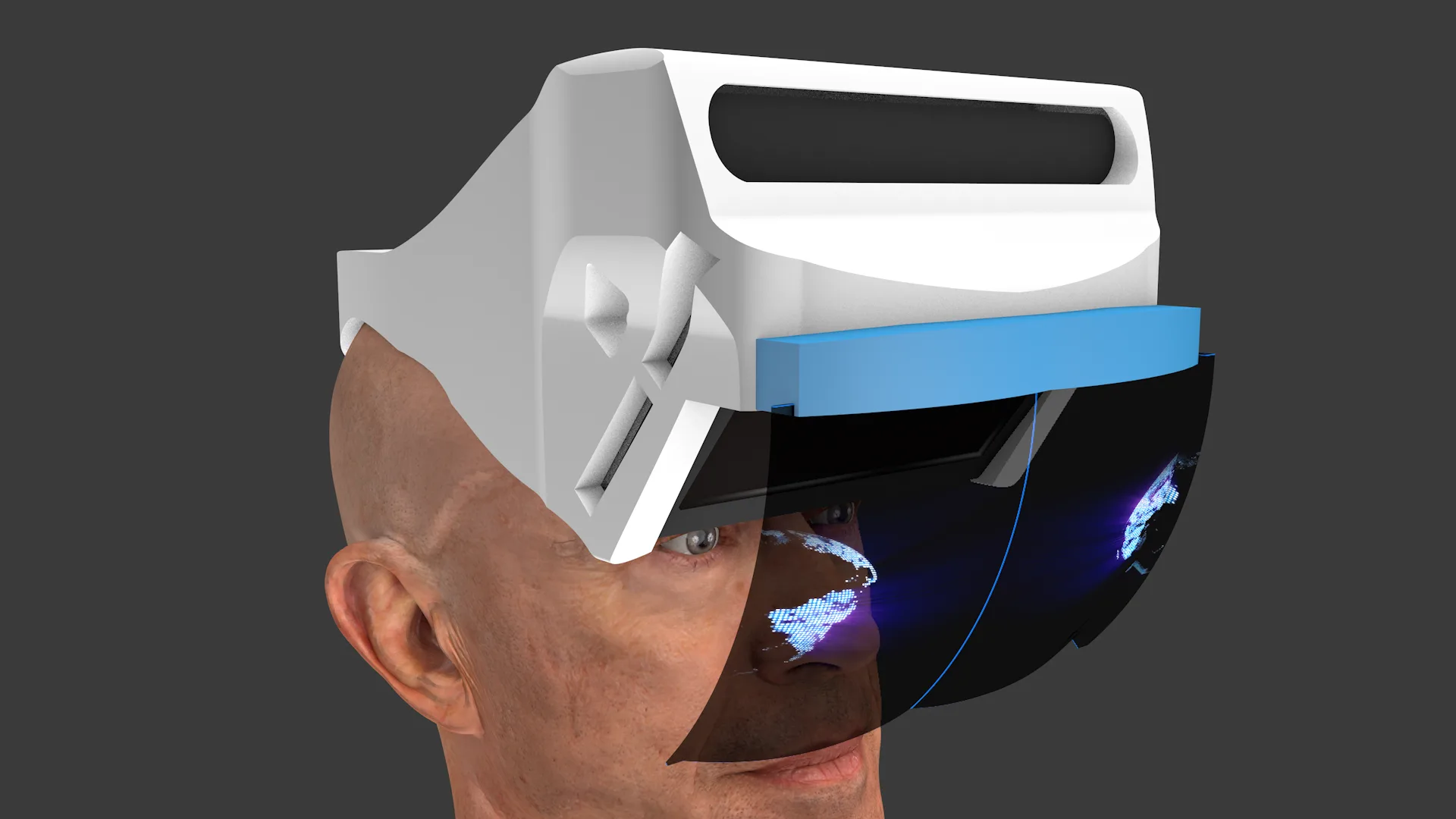
Design render of HoloFlect Pro v2. 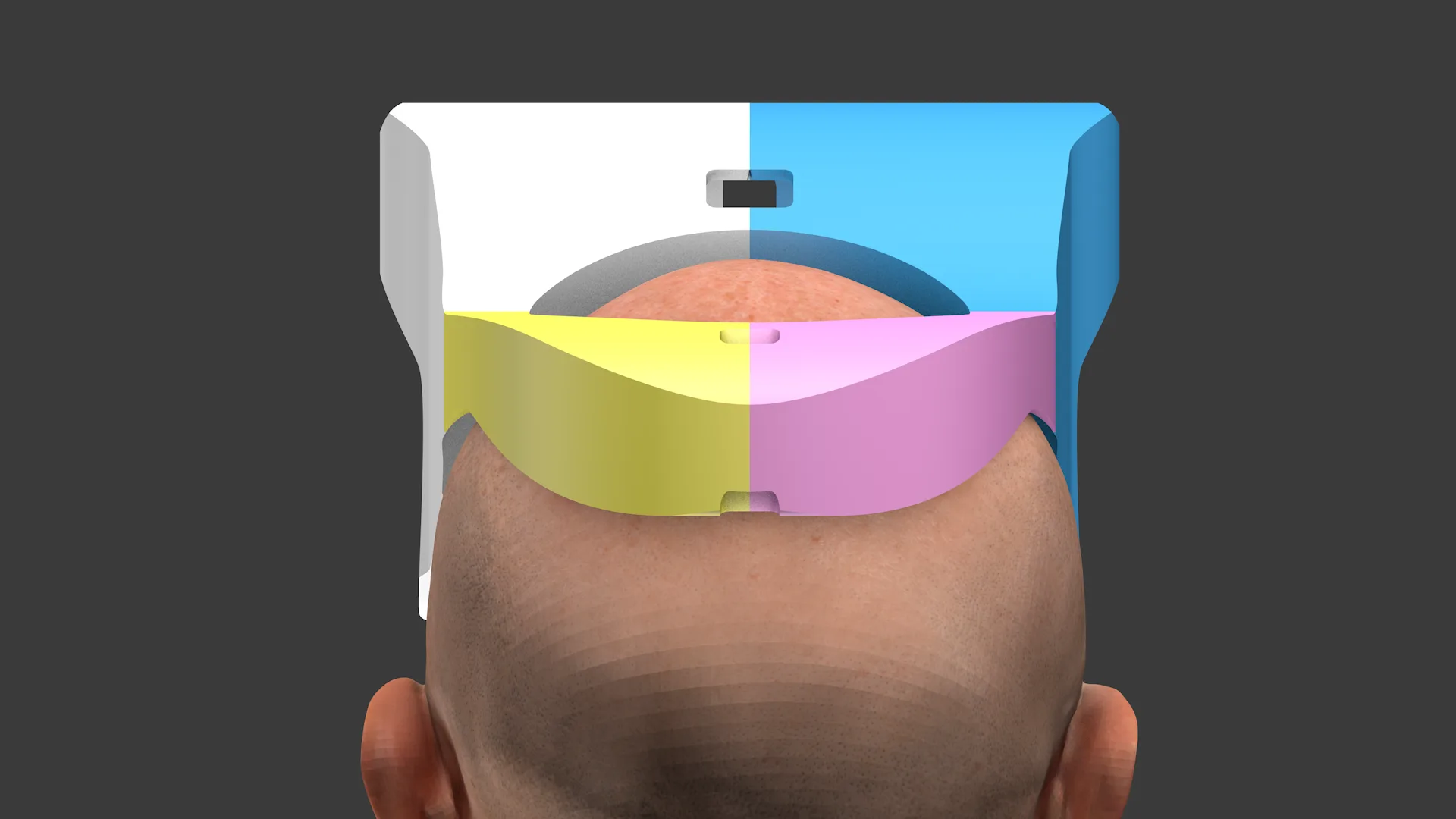
The same design with each printed part in its own color. 
Design render of a simpler, lower-cost build. 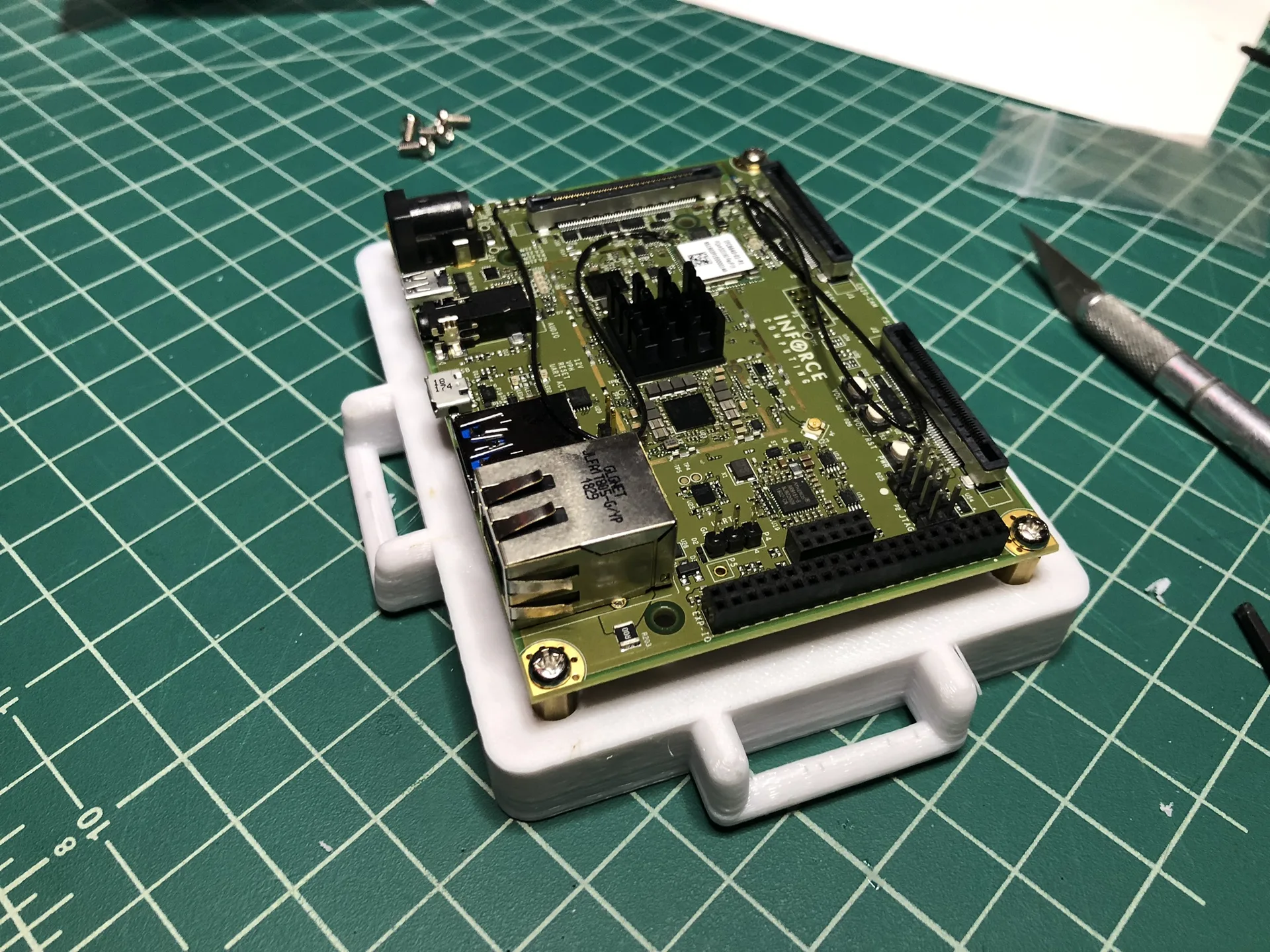
The compute-cluster enclosure from the Pro builds. 
A printed cradle for the display and its driver board. 
A printed visor shell before finishing. 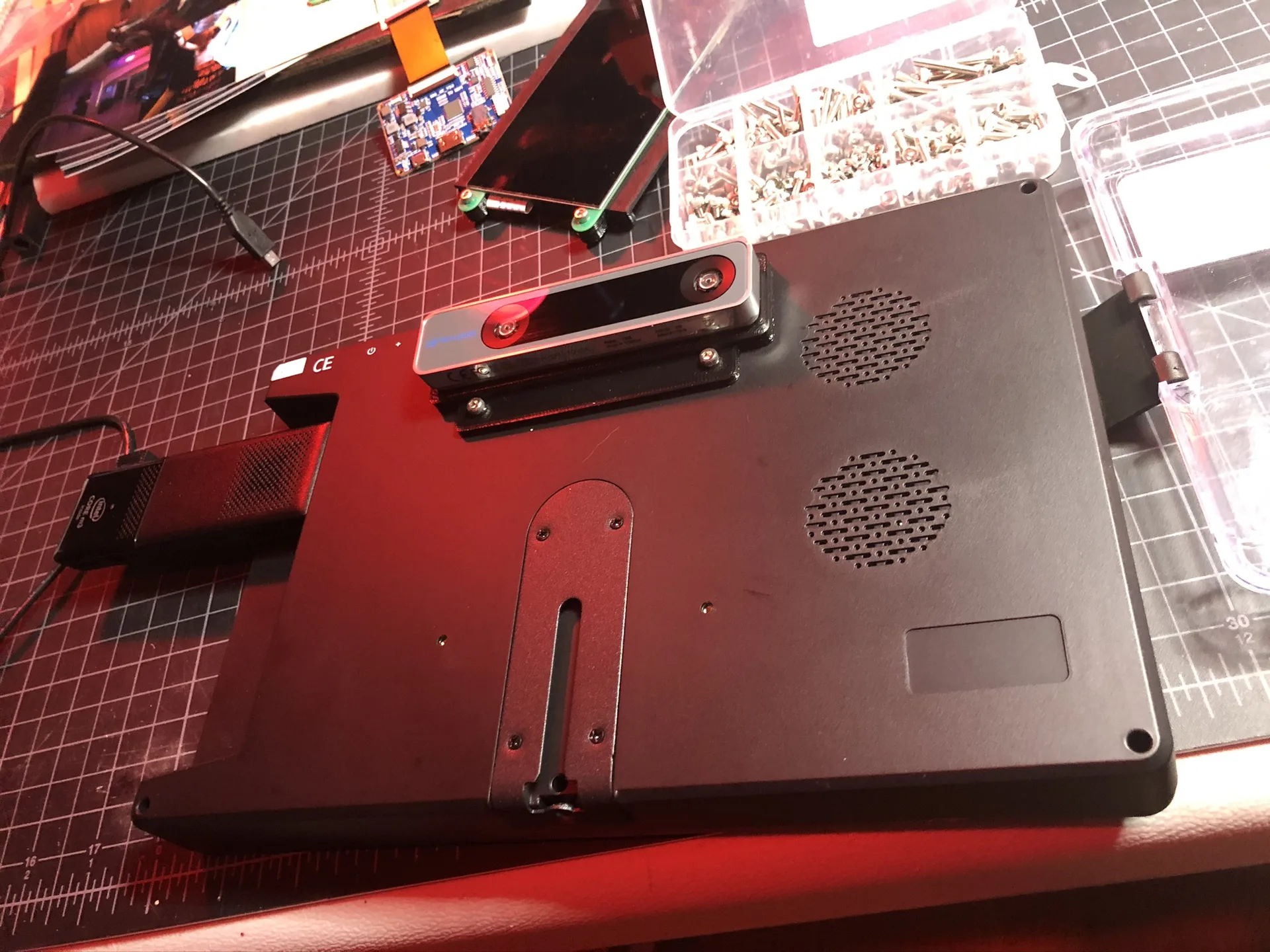
The tablet variant, with a tracking camera on the back of the panel. 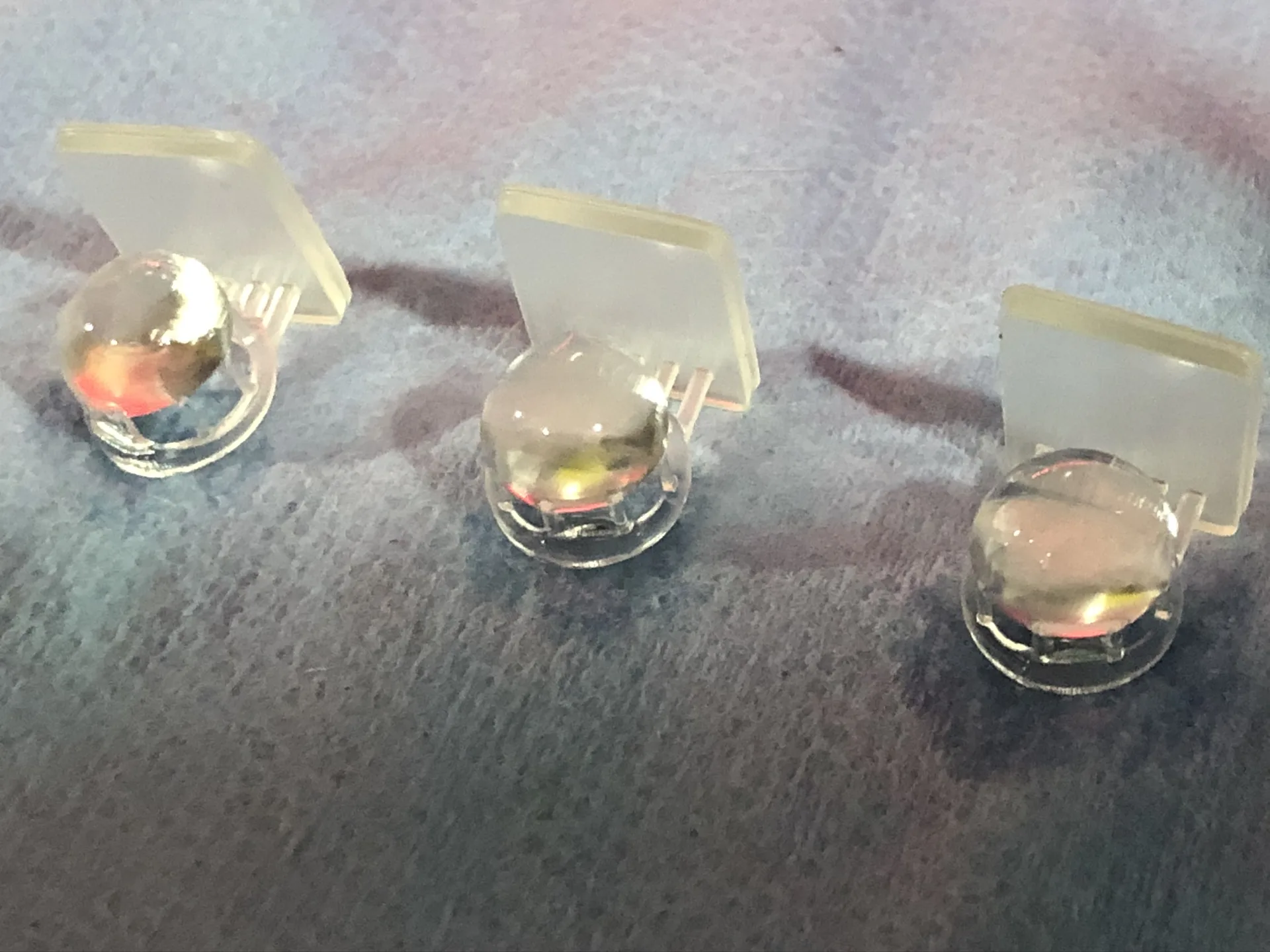
From our lens experiments: small lenses printed in clear resin. 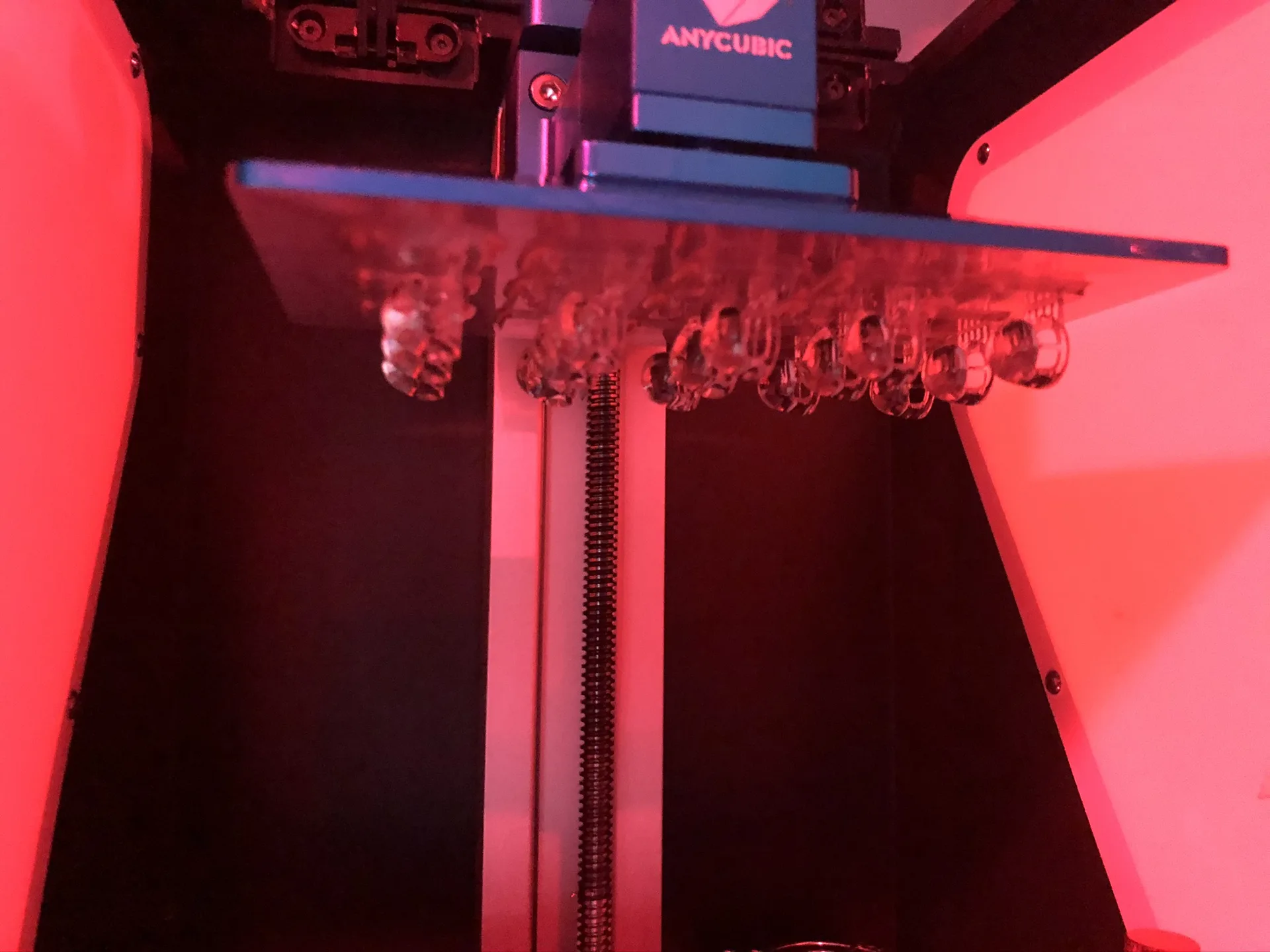
Lens prints on the build plate.
Sources
Related work
-
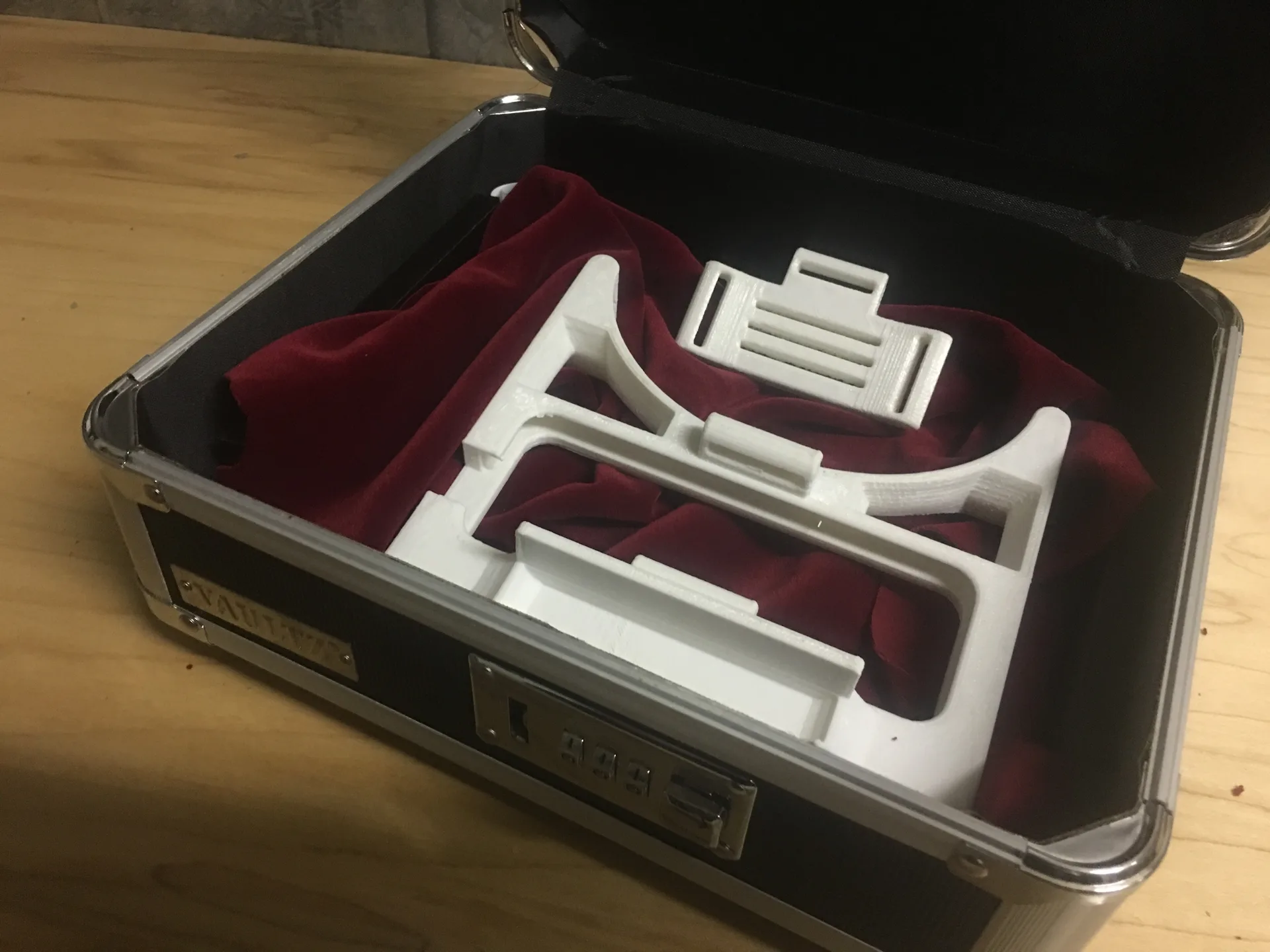
Phone-Based AR Headset
The first HoloFlect prototype, built from a phone and a hand tracker.
-
AquariOS
One platform for AR and VR apps, running several at once, on whatever headset or phone you have.
-
xR Ecosystem
A modular, device-agnostic programming interface for mixed reality.
-

The Blue Vale
A d20-style tabletop roleplaying game played in augmented reality, on almost any device.