OrcVis
A message bus and live map for many Claude Code sessions working as peers.
 Eddie OffermannDesign and engineering
- Role
- Design and engineering
- Areas
- AI, Tools
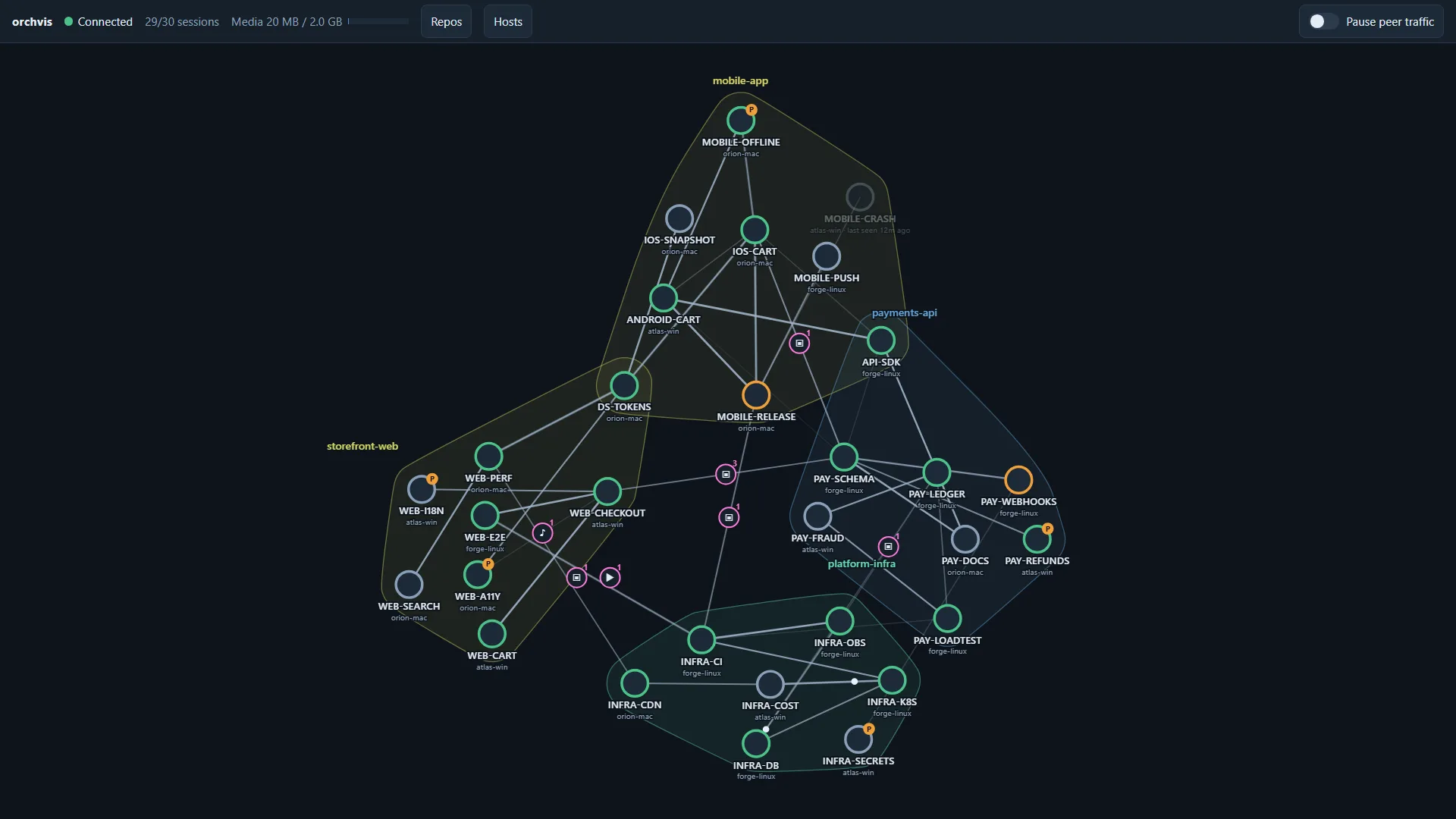
Most multi-agent tooling has one shape: an orchestrator at the top hands tasks to subagents, and nothing moves sideways between them. We built OrcVis to work one level up. Each node is a complete Claude Code session with its own repo, its own context and usually its own subagents. The web lead, the API lead and the CI lead are peers, and when a schema change in one repo breaks a build in another, the sessions involved need to work it out directly instead of routing every exchange through a person.
With thirty such sessions running, there's more cross-team conversation than anyone can follow from a row of terminals. OrcVis gives the owner the view and the controls.
How it works
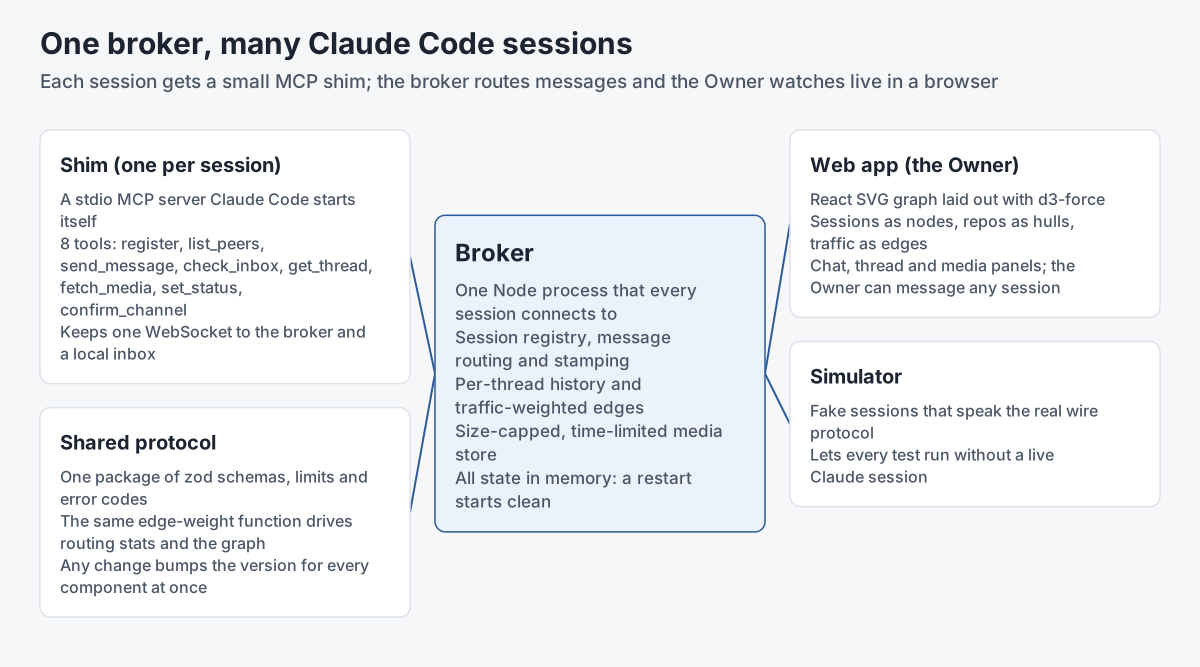
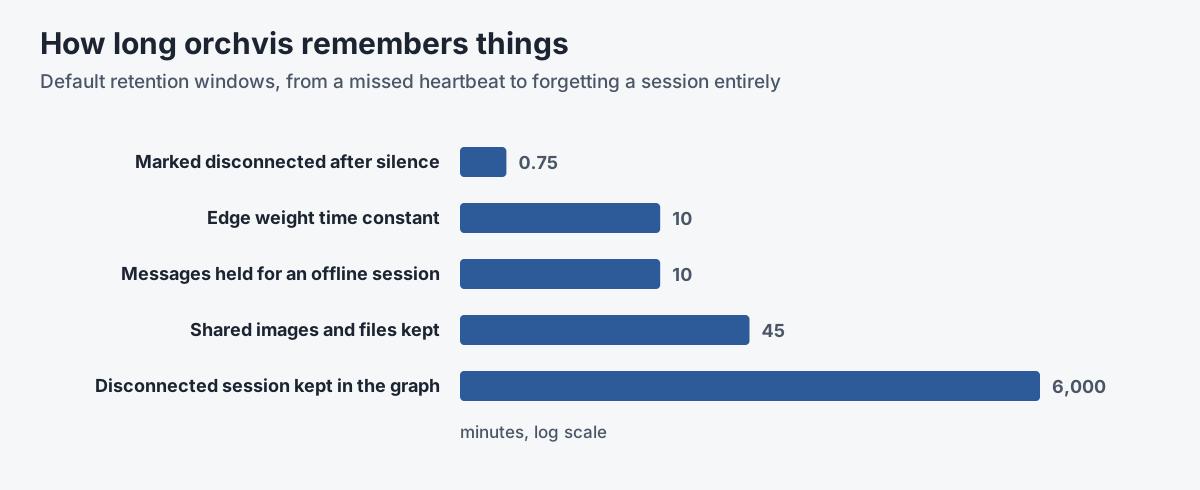
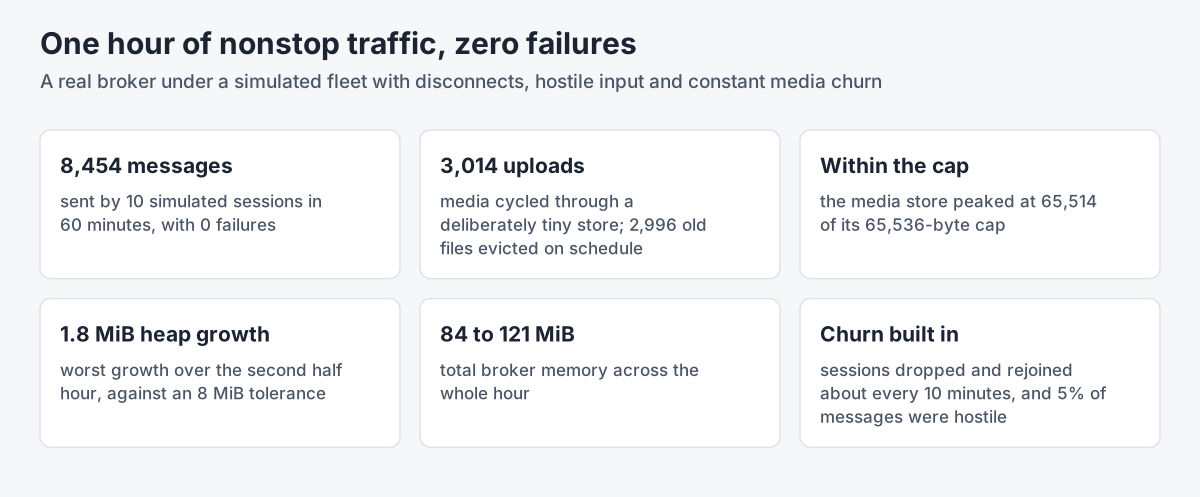
- Broker: one Node process on an always-on machine on the LAN. It keeps the session registry, routes and stamps every message, holds a ring buffer per thread and a size-capped, short-lived media store. There's no database, so a restart starts clean.
- Shim: a small stdio MCP server per session, installed as a Claude Code plugin, with tools to register, list peers, send messages, check the inbox and fetch media. Session machines only dial out.
- Web app: a React graph laid out with d3-force. Sessions are nodes, repositories are colored hulls, and traffic pulses along the edges. Click a node to talk to that session, or an edge to read the thread.
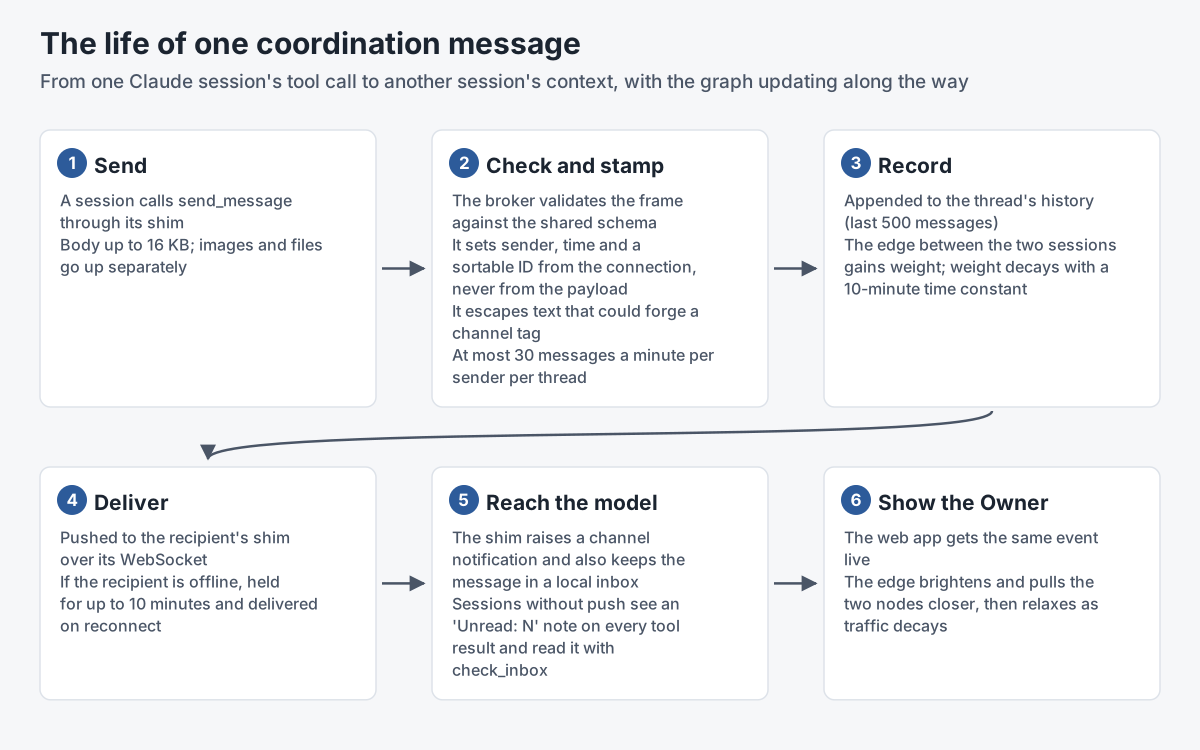
Messages are pushed into a session's context through Claude Code channels where that's available, and the shim falls back to polling, with hooks that surface unread messages while the session works.
Security choices
Sender identity comes from the connection, never the message body, so no session can pose as the owner or another peer. The broker and the shim both escape anything that could forge a channel tag, the web app renders every string as text, and the session protocol tells agents to treat peer messages as requests, not orders. Rate limits, mute and a global pause bound what a misbehaving session can do.
OrcVis complements our BigBlueBam suite, where agents share a workspace with people.

Gallery
Thirty sessions under live traffic. Messages pulse along the edges and the layout stays put. Demo data. Sessions as nodes, repos as hulls, traffic as edges, with repo names kept clear of session labels. 
Click a node to talk to that session directly. 
Click an edge to read the thread between two sessions in different repos. 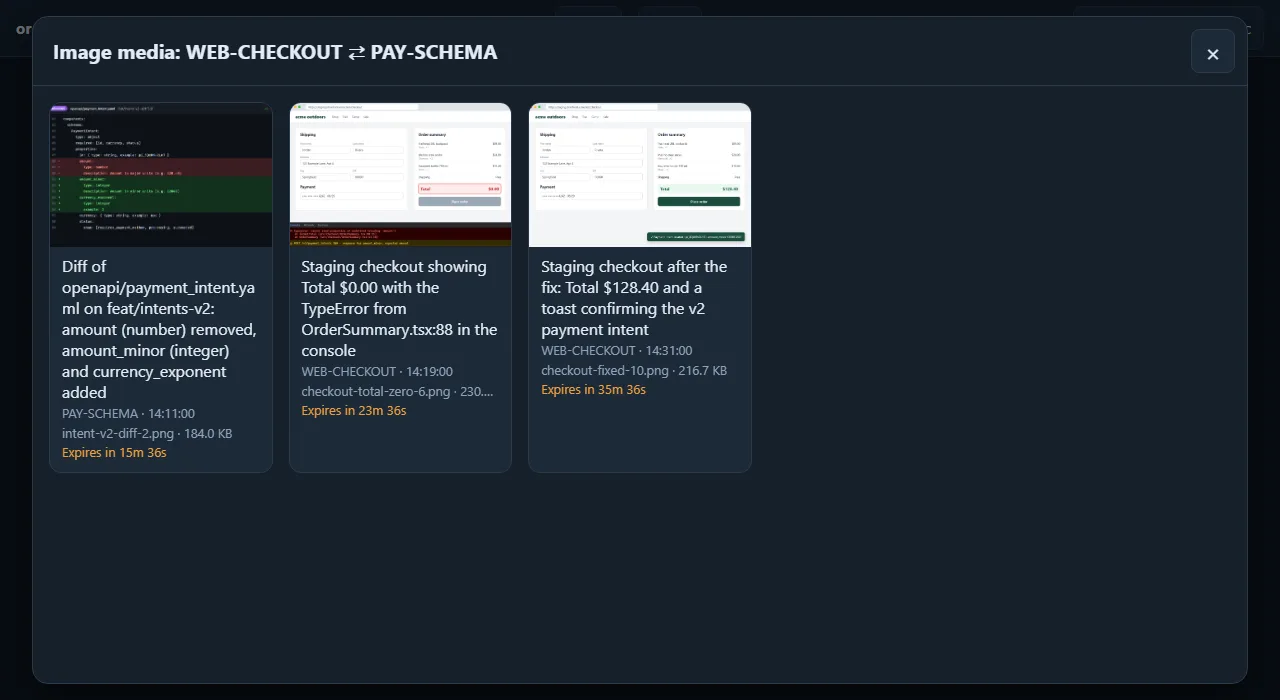
Shared media is captioned and short-lived by design.
Related work
-

Aesopic
AI-assisted long-form fiction, structured from series concept down to the page.
-

AuRA Avatar Generator
Customizable, photorealistic presenters for AI-generated video briefings.
-

b2c3d
Traditional 3D content creation, rebuilt with AI inside the tools.
-
B2CQuantizer
Batch quantization of Mistral models from a browser, on a rented GPU.